TL;DR: Choose a main-content extractor for articles across varied websites, and a selector library when you control the extraction rules for known templates. Evaluate missing paragraphs, unwanted boilerplate, metadata accuracy, and preserved structure separately before adopting a tool.
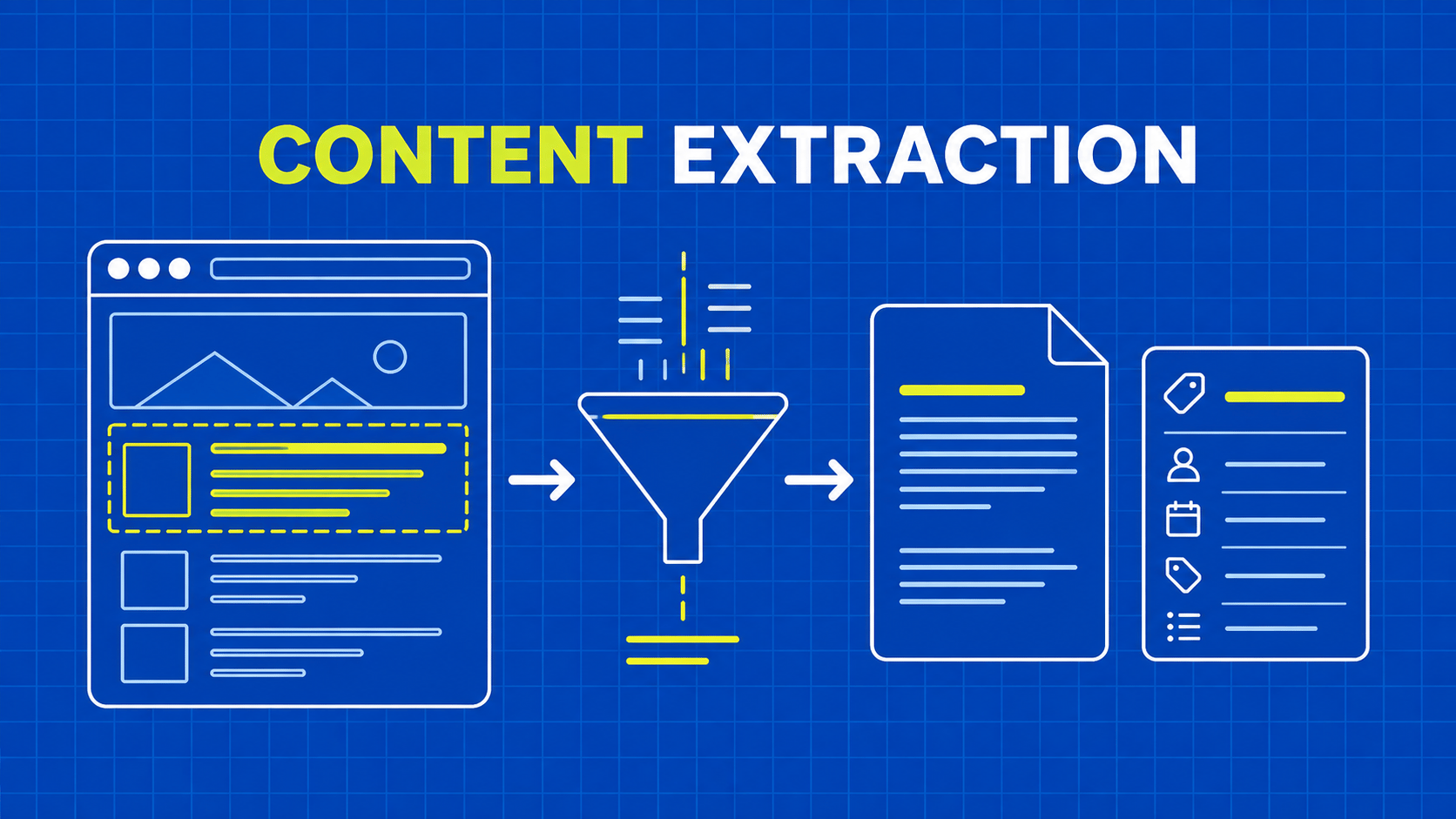
A scraped article that loses its final qualification can be more misleading than an empty result. Content scraping tools help turn webpage markup into useful text, but the quality of that transformation depends on what your project needs to preserve. A search index, a reading interface, and a research archive do not necessarily want the same output.
Start with the document you need to produce. If you want the central article from many publishers, automatic main-content extraction is a useful starting point. If you want an exact description, specification table, or byline from a known template, explicit selectors give you more control. Neither approach fixes an upstream response that contains a consent screen instead of the requested page.
This guide compares four established libraries by their actual responsibilities. It then develops a repeatable evaluation process you can use with your own pages. The goal is a defensible choice for your corpus, with clear failure handling, rather than a universal ranking or an unsupported claim that one extractor understands every website.