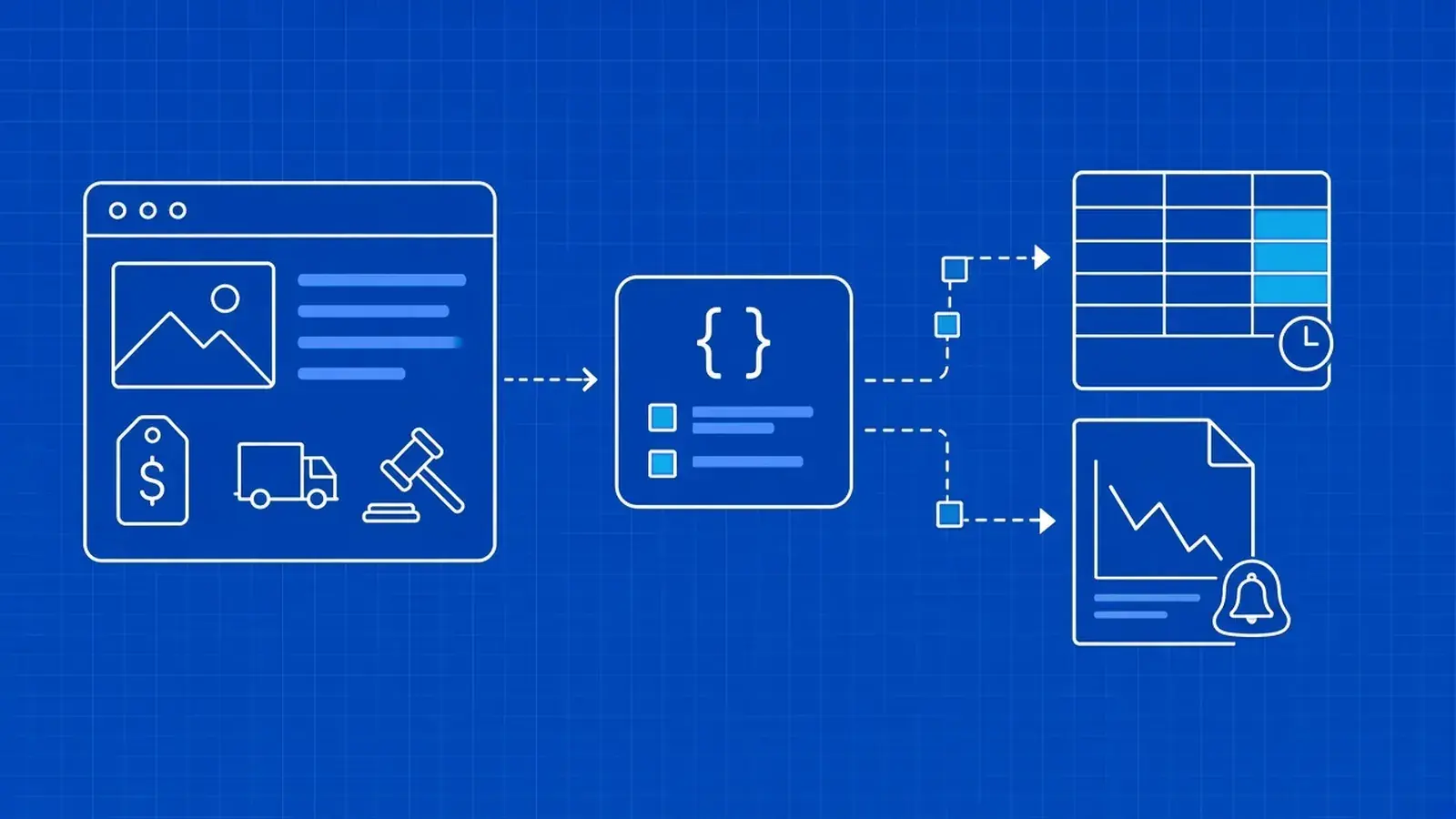
eBay is one of the few places where new, used, refurbished, and auction prices for the same product sit side by side. That makes it a useful pricing signal if you sell those products, source them, or set resale prices. It also makes it easy to get wrong. A live bid isn't a sale price, a "free shipping" listing isn't cheaper until you add up the rest, and two listings with the same title may not be the same item.
This guide shows how to scrape eBay data for price intelligence the careful way. You'll see which pages hold price data, how to choose between eBay's Browse API, a structured data API, and DIY scraping, and how to turn each listing into a timestamped observation with sample Python code. Then you'll match products across sellers, set a refresh cadence, and catch price changes.
TL;DR: eBay's terms restrict automated access, so settle that before you collect anything. Use eBay's Browse API if its approval process and call limits work for you. Otherwise, use a structured data API for item-level JSON. Store each capture as a timestamped observation and keep auctions apart from fixed-price listings. Compare landed price for the same product, condition, and variant.
In short:
- Check the rules first. eBay's terms restrict automated access, so settle that before you collect anything.
- Collect observations, not pages. Every capture is a timestamped record you append, never overwrite.
- Separate auctions from fixed-price listings. They measure different things.
- Compare landed price. Item price plus shipping, or nothing.
- Match before you compare. Same product, same condition, same variant.