Back to Blog
Science of Web Scraping
Mihnea-Octavian ManolacheLast updated on Apr 28, 202626 min read

15 Best Antidetect Browsers in 2026 - Honest Comparison

15 Best Antidetect Browsers in 2026 - Honest Comparison
TL;DR: Antidetect browsers let you run multiple isolated browser profiles, each with a unique fingerprint, so platforms cannot link your accounts. This guide ranks the 15 best antidetect browsers of 2026 across fingerprint quality, automation support, pricing, and proxy integration. We also cover how these tools actually work, when a scraping API is the smarter choice, and which proxy type to pair with each use case.

If you manage more than a handful of online accounts, you already know that the best antidetect browsers are no longer a niche curiosity. They are essential infrastructure. An antidetect browser is a specialized web browser that masks or replaces your digital fingerprint, the unique set of signals (User-Agent, Canvas and WebGL hashes, screen resolution, installed fonts, timezone, and more) that websites use to identify and track you across sessions.

Major ad networks, social platforms, and e-commerce marketplaces now correlate hundreds of these parameters to detect multi-accounting. A standard Chrome profile, even in incognito mode, leaks enough information to tie separate sessions back to the same device. The best antidetect browsers solve this by creating isolated profile environments where every fingerprint component can be independently configured.

In this guide, we evaluate 15 antidetect browsers on concrete criteria, provide a pricing comparison, and map each tool to the use case where it actually excels. We also tackle the questions most listicles tend to skip: when are antidetect browsers overkill? What proxy type should you pair with them? And what are the security risks of trusting a third-party tool with your browsing sessions?

Why Antidetect Browsers Matter in 2026

Browser fingerprinting has moved well beyond simple cookie tracking. Today, platforms collect and cross-reference a broad range of signals: your User-Agent string, installed plugins, Canvas and WebGL render outputs, timezone, language preferences, screen resolution, and hardware-level characteristics like CPU core count and available GPU memory. Combined, these data points form a fingerprint that is nearly as unique as a physical one.

For affiliate marketers running multiple ad accounts, e-commerce sellers operating storefronts across regions, or social media managers handling dozens of brand pages, this fingerprinting arms race creates a real operational problem. Even rotating IP addresses is not enough, because modern anti-fraud systems identify you by your browser environment rather than your network address alone. According to multiple industry reports, platforms are investing heavily in device-graph technology that links accounts not just within one browser, but across devices.

That shift is exactly why demand for anti-detect browsers has surged. These tools isolate each browser session into its own profile with a distinct, internally consistent fingerprint. The result: platforms see what looks like multiple independent users rather than one person with a suspicious cluster of accounts. If you operate at any meaningful scale in advertising, e-commerce, or data collection, understanding the best antidetect browsers available in 2026 is no longer optional.

The consequences of getting caught have also escalated. Platforms now apply cascading bans, where one flagged account can trigger reviews of every account sharing similar fingerprint traits. A single misconfigured Canvas hash or timezone mismatch can cost you an entire network of accounts that took months to warm up.

How We Evaluated These Antidetect Browsers

Rather than ranking tools by gut feeling, we built a weighted evaluation framework around six core criteria. Transparency matters here: you should be able to look at our rubric and decide whether your priorities differ from ours.

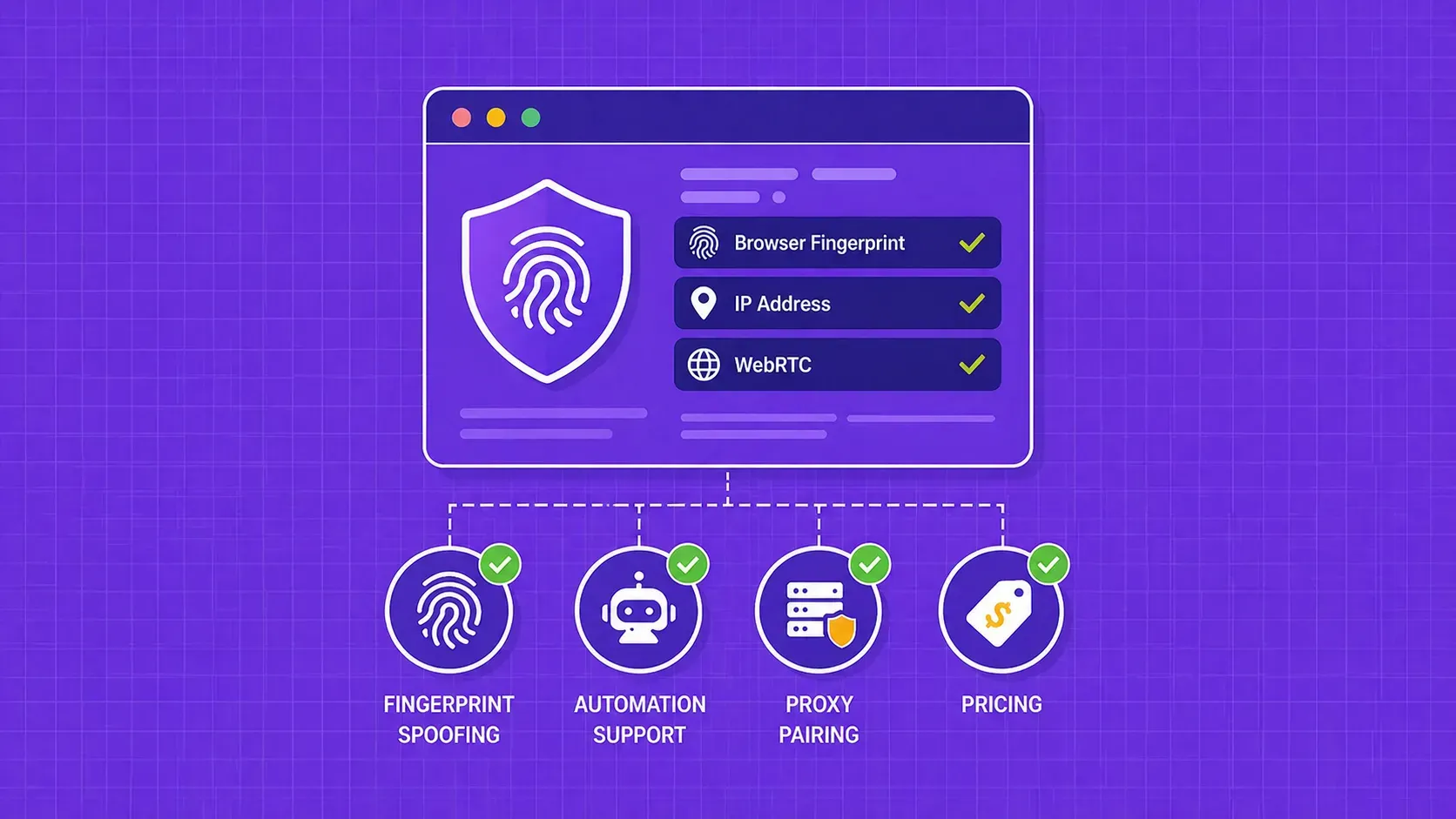
Fingerprint Spoofing Depth (30%): How thoroughly does the browser mask Canvas, WebGL, User-Agent, timezone, fonts, hardware parameters, and WebRTC? We reference community benchmarks from tools like PixelScan and IPhey, which simulate the checks real anti-fraud systems run. We did not run original lab tests for this article, so fingerprint-quality observations are drawn from documented third-party results and user reports.

Automation and API Support (20%): Can you script profile creation, launch, and interaction via a REST API, Puppeteer, Playwright, or Selenium? For scraping and media-buying workflows, this is non-negotiable.

Pricing Per Profile (20%): We compare the cost to run 100 profiles across tiers, factoring in free plans where they exist. All pricing data should be verified against each vendor's current page before purchasing, as rates change frequently.

Proxy Integration (10%): Does the browser support direct proxy assignment per profile, including residential, datacenter, mobile, and ISP proxy types? Bonus points for built-in proxy management dashboards.

Ease of Use and Onboarding (10%): How quickly can a new user launch a working profile without reading extensive documentation? We weigh interface clarity, onboarding tutorials, and community support.

Update Frequency (10%): An antidetect browser that lags behind Chromium or Firefox stable releases develops an "atypical" footprint that detection systems can flag. Regular kernel updates are a sign the development team takes evasion seriously and is actively tracking browser engine changes.

Quick-Glance Comparison Table

The table below summarizes all 15 tools at a glance. Use it to narrow your shortlist before diving into the individual reviews. Pricing reflects approximate starting tiers at the time of writing; always confirm with the vendor directly, as these figures change frequently.

Tool

Starting Price (approx.)

Free Tier

Engine(s)

Best For

Standout Feature

Multilogin

~$2 trial / premium tiers

No

Mimic (Chromium), Stealthfox (Firefox)

High-stakes teams, agencies

Deepest fingerprint customization

GoLogin

~$24/mo (100 profiles)

3 profiles

Orbita (Chromium)

All-around use

Cloud-launched profiles, fast setup

AdsPower

Competitive entry pricing

Limited free

Sun (Chromium), Flower (Firefox)

Budget automation at scale

Built-in no-code RPA

GeeLark

Varies by plan

Limited

Cloud Android

Mobile-first campaigns

Real cloud-phone fingerprinting

Kameleo

Mid-range

No

Chroma, Junglefox, mobile

Developers, mobile emulation

Multi-engine + Android profiles

Octo Browser

Mid-range

No

Chromium

Power users, teams

Fast profile creation, real device params

Dolphin Anty

~$10 pay-as-you-go

5 profiles

Chromium

Affiliate marketing, media buying

Scenario-based automation

Incogniton

Free for 2 months (10 profiles)

Yes (limited)

Chromium

Solo operators, small teams

Budget-friendly with Selenium support

Nstbrowser

Generous free tier

Yes

Chromium

Scraping-focused workflows

Built-in unblocker + RPA marketplace

VMLogin

Low entry cost

No

Chromium

Small teams on a budget

REST API for profile management

MuLogin

Mid-range

No

Chromium

Multi-account management

Fingerprint templates, cookie tools

Ghost Browser

Subscription-based

No

Chromium

Productivity, session isolation

Workspace-based identity separation

Decodo X-Browser

Bundled with proxy plans

Proxy-dependent

Chromium

Proxy-first users

Tight proxy vendor integration

ixBrowser

Low cost

Yes

Chromium

Cross-border e-commerce

Free plan with team sharing

Lalicat

Low cost

No

Chromium (Windows only)

Granular fingerprint control

Deep parameter-level access

The 15 Best Antidetect Browsers Reviewed

Below is a closer look at each tool. Every review follows the same structure: what the browser does well, where it falls short, who should consider it, and approximate pricing. We have ordered them roughly by overall capability and market presence, though the "best" choice depends entirely on your use case.

Multilogin

Multilogin is widely regarded as one of the original antidetect browsers and is reportedly the company that coined the term itself (though that claim is difficult to verify independently). It ships with two proprietary browser engines: Mimic, built on Chromium, and Stealthfox, built on Firefox. Both offer deep fingerprint customization down to hardware-level parameters like GPU renderer strings and audio context hashes.

In documented third-party checks, Multilogin profiles have passed PixelScan and IPhey tests without flagged inconsistencies. Team collaboration features, including role-based access and profile sharing, make it a strong fit for agencies managing large account portfolios. API access supports scripted profile creation and launch, which integrates cleanly into automated workflows.

The tradeoff is price. Multilogin is one of the most expensive options on the market, with a trial priced at approximately $2 for three days and production plans climbing steeply from there. If your budget is tight or you only need a handful of profiles, cheaper alternatives deliver solid fingerprint quality at a fraction of the cost. The premium is justified when detection consequences are severe, such as losing high-value ad accounts or agency client relationships.

Best for: Enterprise teams, agencies, and high-stakes multi-account operations where fingerprint depth justifies the premium.

GoLogin

GoLogin runs on its own Orbita engine (a Chromium fork) and positions itself as the best all-around antidetect browser for most users. It supports creating hundreds of profiles with fully isolated data, and cloud-launched profiles mean you can run sessions from the cloud without tying them to your local machine's hardware.

Profile launch times sit at roughly 3.5 seconds, according to available benchmarks, with smooth parallel execution across multiple profiles. GoLogin has also passed PixelScan and IPhey checks across varied proxy configurations in documented community tests, showing consistent fingerprint integrity.

Pricing starts at around $24 per month for 100 profiles, with a 7-day free trial and a limited free plan offering 3 profiles. That combination of performance, reasonable pricing, and usability makes GoLogin one of the strongest contenders for users who need a reliable anti-detect browser without enterprise-level costs. The mobile app is also worth mentioning: you can manage and even launch profiles from your phone, which adds operational flexibility.

Best for: Solo marketers, small teams, and anyone who wants solid fingerprint evasion with a gentle learning curve and competitive pricing.

AdsPower

AdsPower pairs two browser engines (Sun for Chromium and Flower for Firefox) with a built-in no-code RPA automation system. You can build multi-step workflows by dragging and dropping action blocks, which makes it especially appealing for media buyers who need to automate repetitive tasks across dozens of accounts without writing a single line of code.

Team management features are robust, with role-based permissions and profile sharing that scale well for agencies. Pricing is competitive, often undercutting comparably featured tools by a meaningful margin, though the exact tiers fluctuate so it is worth checking the vendor page directly.

The dual-engine setup means you can switch between Chromium-based and Firefox-based profiles depending on what passes detection checks on your target platforms. For budget-conscious teams running automation at scale, AdsPower is one of the best antidetect browsers in the value-for-money category.

Best for: Ad arbitrage teams, agencies with large account volumes, and users who want built-in automation without coding.

GeeLark

GeeLark takes a fundamentally different approach from every other tool on this list. Instead of spoofing a desktop browser environment, it provides cloud-based Android phone profiles, effectively giving you remote access to real Android devices where each instance acts as a separate, isolated profile.

This matters for mobile-first campaigns on platforms like TikTok, Instagram, and Snapchat that scrutinize mobile-specific fingerprint signals (sensor data, battery status, screen dimensions) that desktop antidetect browsers simply cannot convincingly replicate. GeeLark is reportedly the first anti-detection cloud phone on the market, though this is difficult to independently verify.

The limitation is scope. If your workflow is desktop-centric (managing Facebook Business accounts in a browser, for example), a traditional antidetect browser is a better fit. But if mobile-app fingerprinting is a core requirement for your campaigns, GeeLark fills a gap that most competitors on this list do not address at all.

Best for: TikTok marketers, mobile-app affiliate campaigns, and any use case requiring authentic Android-level fingerprints.

Kameleo

Kameleo distinguishes itself with multi-engine support: Chroma (Chromium), Junglefox (Firefox), and dedicated mobile browser profiles. It is one of the few antidetect browsers that supports full emulation of Android mobile profiles alongside desktop ones, all managed from a single interface.

For developers, Kameleo offers a well-documented local API that integrates with Selenium, Puppeteer, and Playwright. The fingerprint tuning is granular, letting you control individual parameters rather than relying on preset configurations.

Kameleo does not offer a free tier, and the pricing sits in the mid-range. The tool runs locally rather than in the cloud, which gives you more control over your data but also means your hardware resources are the bottleneck when scaling profile counts.

Best for: Developers who want deep API integration, teams needing both mobile and desktop profiles, and privacy-conscious users who prefer local profile storage over cloud-hosted alternatives.

Octo Browser

Octo Browser is built for speed and fingerprint precision. At the time of writing, its profiles are constructed from real device parameters rather than randomized values, which is considered best-in-class for passing standard fingerprint tests. Profile creation is notably fast, and the kernel tracks Chromium updates closely to avoid the "outdated engine" detection vector that plagues slower-updating competitors.

Team management is a strong suit: you can share profiles with granular permissions, making it viable for agencies and operations with multiple operators. The interface is clean and does not require extensive onboarding.

Pricing is mid-range with no free tier. If you need highly configurable fingerprints and a team-oriented workflow without the premium pricing of top-tier tools, Octo Browser competes directly with higher-priced alternatives while maintaining comparable fingerprint depth.

Best for: Power users and teams that prioritize fingerprint accuracy and fast kernel updates over rock-bottom pricing.

Dolphin Anty

Dolphin Anty was purpose-built for affiliate marketers and media buyers running campaigns across Facebook, Google, and TikTok. Its scenario-based automation lets you script multi-step workflows (warm up accounts, post content, interact with ads) without requiring external tools.

The free-forever plan currently includes approximately 5 profiles (reduced from a previous limit of 10). A pay-as-you-go tier starts at about $10 for up to 60 profiles, with the Base plan at roughly $89 per month for 100 profiles. Profile launch times are in the 3 to 4 second range based on available benchmarks.

In community testing, Dolphin Anty passed PixelScan checks cleanly, though IPhey flagged inconsistencies on a couple of parameters. This is worth noting if you operate on platforms with particularly aggressive fingerprint auditing.

Best for: Affiliate marketers, media buyers, and ad arbitrage professionals who need built-in account-warming automation at a reasonable price point.

Incogniton

Incogniton targets budget-conscious users who still need decent automation support. It integrates with Selenium and Puppeteer out of the box, which makes it viable for scraping workflows and automated account management.

The free plan offers up to 10 profiles for 2 months, giving you enough runway to evaluate the tool properly. However, profiles created with default settings have shown issues in fingerprint consistency checks. Out-of-the-box masking may not be perfect, particularly for hardware-level parameters, so you will want to manually tune profiles before deploying them on strict platforms.

Profile syncing across devices is supported, which is a useful feature for distributed small teams.

Best for: Solo operators and small teams looking for an affordable anti-detect browser with scripting support, provided they are comfortable tuning fingerprint settings manually.

Nstbrowser

Nstbrowser leans heavily into the scraping use case. It includes a built-in visual RPA automation editor and a marketplace of ready-made automation scripts that you can deploy without building workflows from scratch. There is also a built-in unblocker designed to handle anti-bot challenges directly within the browser environment.

The free tier is generous compared to most competitors on this list, making Nstbrowser an accessible entry point for users who want to explore antidetect browsers for web scraping before committing budget. Puppeteer and Playwright integration is supported for those who prefer programmatic control over visual workflow builders.

If your primary use case is data collection rather than multi-account management on social platforms, Nstbrowser is one of the best antidetect browsers optimized specifically for that workflow.

Best for: Web scrapers, data engineers, and anyone who wants a scraping-optimized antidetect browser with built-in automation tools.

VMLogin

VMLogin keeps things straightforward: a Chromium-based antidetect browser with REST API support for profile management and browser automation. Pricing is on the lower end of the market, making it an accessible choice for small teams or individual operators who need programmatic control without a large investment.

The API allows programmatic profile creation and launch, which is useful for scaling operations without manual intervention. Fingerprint customization covers the standard parameters (Canvas, WebGL, User-Agent, fonts, timezone), though it does not offer the depth or emulation quality of higher-priced alternatives like Multilogin or Octo Browser.

Best for: Small teams and solo users who need basic API-driven profile management at a low price point.

MuLogin

MuLogin positions itself in the mid-range segment with a focus on streamlined multi-account management. Fingerprint templates simplify profile creation: instead of configuring each parameter individually, you can apply a template that sets a consistent, realistic fingerprint profile in one click.

Cookie management tools let you import and export session cookies across profiles, which is useful for account warming and transfer workflows. Team features include profile sharing and role-based access controls.

The tool does not stand out dramatically in any single category, but it covers the fundamentals solidly and is competitively priced for what it offers. Think of it as a reliable workhorse rather than a specialist.

Best for: Mid-size teams managing large numbers of accounts who want streamlined profile creation without deep technical tuning.

Ghost Browser

Ghost Browser is a bit of an outlier on this list. It provides workspace-based identity separation with per-tab proxy assignment and cookie isolation, but it does not deeply spoof underlying browser fingerprints the way dedicated antidetect tools do.

Think of it as a multi-session productivity tool rather than a full anti-fingerprint browser. If you need to log into five different Gmail accounts simultaneously without them cross-contaminating cookies, Ghost Browser handles that cleanly. But if you need to fool an anti-fraud system that examines Canvas hashes and WebGL rendering patterns, you will need a more specialized tool from this list.

Best for: Productivity-focused users, social media managers, and anyone who needs session isolation without requiring deep fingerprint evasion.

Decodo X-Browser

Decodo X-Browser is tightly bundled with a specific proxy provider's infrastructure. The upside is seamless proxy integration: profiles are pre-configured with residential or datacenter IPs from the bundled proxy pool, reducing setup friction significantly.

The downside is limited standalone utility. If you already have proxy infrastructure from another provider, Decodo X-Browser may feel restrictive. Its fingerprint customization is adequate for basic multi-accounting but does not match the depth of dedicated tools.

Best for: Users who are already subscribed to the associated proxy service and want a lightweight antidetect layer on top of their existing proxy investment.

ixBrowser

ixBrowser targets cross-border e-commerce operators with a free plan and built-in team-sharing features. The tool covers standard fingerprint parameters and makes it easy to assign proxies per profile, with a straightforward interface that does not require extensive training.

For advanced users, the limitations become apparent: fingerprint depth is not as granular as higher-tier tools, and the browser engine update cadence is harder to verify. Still, for sellers managing multiple storefronts on marketplaces across different regions, ixBrowser is a functional, budget-friendly choice.

Best for: Cross-border e-commerce sellers who need basic multi-account management with minimal upfront cost.

Lalicat

Lalicat offers deep, parameter-level fingerprint access for users who want to manually configure every aspect of their browser profile. Canvas noise, WebGL parameters, font lists, and hardware spoofing are all individually adjustable, giving you more control than most competitors at this price point.

The significant limitation: Lalicat is Windows-only. If your team runs macOS or Linux, this tool is simply not an option. Pricing is low, which makes it attractive for Windows-based operators who value granular control over convenience and cross-platform flexibility.

Best for: Windows users who want maximum fingerprint configurability at a low price, and who do not mind a less polished interface in exchange for deep parameter access.

Which Antidetect Browser Fits Your Use Case?

Picking the right antidetect browser depends less on feature checklists and more on your actual workflow. Here is a decision framework organized by common use cases to help you cut through the noise.

Affiliate Marketing and Media Buying: You need reliable fingerprint evasion on Facebook, Google, and TikTok ad platforms plus account-warming automation. Dolphin Anty and AdsPower are purpose-built for this. If budget is no object and you need enterprise-grade fingerprint depth, Multilogin is the premium choice. Pair any of these with residential proxies for maximum trust scores on ad networks.

E-commerce Multi-Accounting: Running multiple seller or buyer accounts across Amazon, eBay, or Shopee requires profiles that pass marketplace fraud checks. GoLogin and Octo Browser both deliver strong fingerprint quality at reasonable per-profile costs. For cross-border sellers specifically, ixBrowser offers a free entry point worth testing.

Social Media Management: Managing dozens of brand accounts on Instagram, X (Twitter), or TikTok demands quick profile switching and stable sessions. GoLogin's cloud-launched profiles and AdsPower's team features both work well here. For mobile-native platforms where app-level fingerprints matter, GeeLark's cloud-phone approach is the strongest option available.

Web Scraping and Data Collection: If fingerprint evasion during data collection is the primary goal, Nstbrowser's built-in unblocker and RPA marketplace make it the most scraping-optimized pick. Kameleo's local API and multi-engine support are also excellent for developers building custom scraping pipelines. That said, if you do not actually need a visible browser session, a dedicated scraping API is often faster, cheaper, and simpler to maintain (more on that in the next section).

Privacy-Conscious Browsing: If you simply want to browse without being tracked and profiled, most tools on this list are overkill. GoLogin with a residential proxy or Kameleo's local setup covers the basics without the complexity of full multi-account management.

The general rule: match the tool's sweet spot to your primary use case, then verify that its fingerprint quality passes the specific platforms you target.

How Antidetect Browsers Actually Work

Understanding the mechanics helps you evaluate whether a tool's claims hold up. At a high level, every antidetect browser does two things: it isolates profile environments and it manipulates the fingerprint signals each profile emits.

Fingerprint Components

Your browser exposes dozens of identifiable data points to every website you visit. The key ones that antidetect browsers target include:

  • User-Agent: The string that tells a site which browser and OS you are running. Spoofing this is table stakes for any anti-detect browser.
  • Canvas fingerprint: Websites render an invisible graphic element and hash the pixel output. Different hardware and drivers produce different hashes, making Canvas a reliable identifier. Antidetect browsers inject controlled noise or substitute a pre-computed result.
  • WebGL fingerprint: Similar to Canvas but uses your GPU's rendering pipeline. Inconsistencies between claimed hardware and actual WebGL output are a common detection vector.
  • Timezone and language: These must match the IP address of your proxy. A profile claiming to be in Berlin but connecting from a Tokyo IP is an immediate red flag.
  • Hardware parameters: CPU core count, available memory, and GPU model. Mismatches between these values and the claimed OS make a profile instantly suspicious to fingerprint auditing systems.
  • Fonts: The set of installed fonts varies by OS and region. An unusual font list can narrow down your identity or reveal that you are running a spoofed profile.
  • WebRTC and DNS leaks: Even with a proxy, your real IP can leak through WebRTC requests or DNS queries if the browser does not explicitly block or reroute them.

Masking vs. Emulation

There is an important distinction between browsers that merely mask values (overriding JavaScript APIs to return fake data) and those that emulate them (actually rendering content through a different pipeline so the output is internally consistent). Higher-quality antidetect browsers aim for emulation-level consistency. Budget tools tend to rely on masking, which can be caught by sophisticated detection systems that cross-check related parameters for logical coherence.

To validate any antidetect browser's claims, run your profiles through testing tools like PixelScan or IPhey before deploying them in production. These services analyze hundreds of parameters for internal consistency, mimicking the checks that real anti-fraud platforms perform. Tips for avoiding detection extend beyond fingerprinting to include behavioral patterns and request timing.

Antidetect Browsers vs Headless Browsers vs Scraping APIs

Not every job requires a full antidetect browser. Here is an honest comparison of three common approaches to help you choose the right tool for the task.

Antidetect Browsers excel when you need persistent, interactive sessions with realistic fingerprints. Managing social media accounts, running ad campaigns, and operating e-commerce storefronts all require a browser that looks and behaves like a real user over extended periods. The overhead is justified because the session itself is the product of your work.

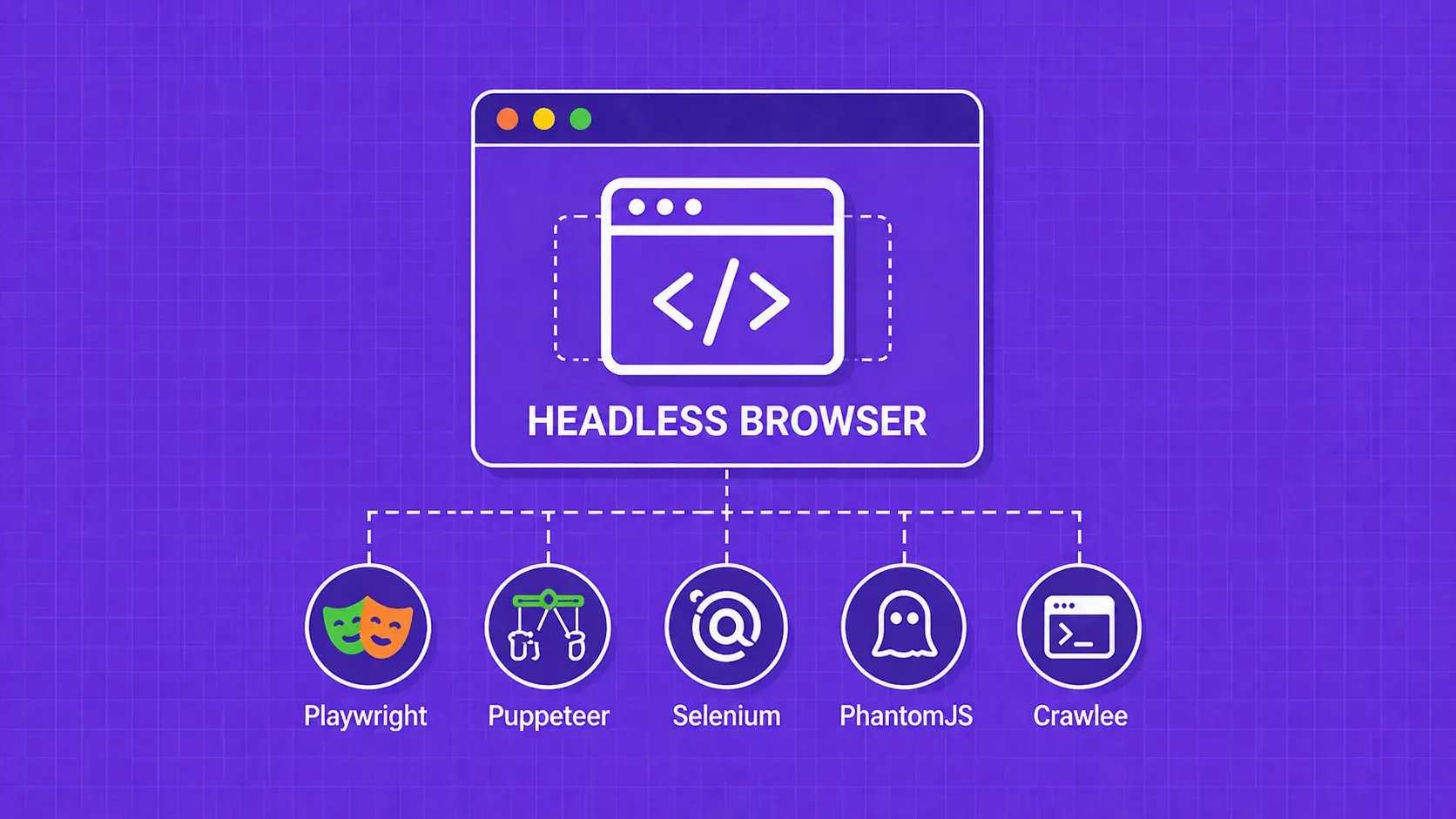
Headless Browsers (Puppeteer, Playwright, Selenium) are faster and more resource-efficient for automated tasks. They run without a graphical interface and are ideal for testing and scraping. However, they typically do not spoof browser fingerprints in detail, which means sophisticated anti-bot systems can detect them. You can add stealth plugins, but maintaining those patches is a burden that grows as detection technology evolves. For teams already using browser automation frameworks, adding an antidetect layer on top is possible but adds complexity.

Scraping APIs abstract away the entire browser layer. You send a URL, and the service handles proxy rotation, CAPTCHA solving, fingerprint management, and retry logic behind the scenes. You get back raw HTML or structured data. For pure data collection at scale, this is often the most cost-effective and maintainable approach.

Factor

Antidetect Browser

Headless Browser

Scraping API

Best for

Multi-account management, persistent sessions

Automated testing, lightweight scraping

High-volume data collection

Fingerprint evasion

Deep, configurable

Minimal (stealth plugins help)

Handled by the service

Infrastructure cost

Local machine or cloud VM

Server resources

Pay-per-request

Maintenance

Moderate (profile tuning, proxy management)

High (stealth upkeep)

Low (vendor-managed)

Session persistence

Yes

Possible but complex

Stateless by default

The takeaway: if you need to "be" a user, use an antidetect browser. If you need to collect data at scale, consider whether a headless browser or a scraping API would be simpler and cheaper. Many practitioners use a combination: an antidetect browser for account management and a scraping API for data extraction.

Choosing the Right Proxy Type for Your Antidetect Browser

An antidetect browser without a good proxy is like a disguise with your name badge still pinned on. The browser handles the fingerprint side; the proxy handles the network side. Mismatching the two undermines both.

Residential Proxies route your traffic through real ISP-assigned IP addresses, making requests virtually indistinguishable from regular household traffic. They are the default choice for social media management, ad-account operations, and any platform with aggressive IP-reputation scoring. The tradeoff is cost: residential bandwidth is more expensive per gigabyte than datacenter alternatives. If you are evaluating residential proxy providers, compare pool size, geographic coverage, and rotation options before committing.

Datacenter Proxies are fast and cheap but carry a higher detection risk. Many platforms maintain blocklists of known datacenter IP ranges. Use them for targets with lighter anti-bot measures or for internal testing where detection is not a concern.

Mobile Proxies use IP addresses assigned by mobile carriers, giving them strong trust scores on platforms that see heavy mobile traffic (Instagram, TikTok, Snapchat). They pair naturally with mobile-focused antidetect tools like GeeLark.

ISP Proxies sit in between: they are datacenter-hosted IPs registered under a residential ISP, offering the speed of datacenter proxies with the trust score of residential ones. They work well for accounts that maintain a static IP over long sessions, such as account warming workflows.

Proxy Type

Trust Level

Speed

Cost

Best Pairing

Residential

High

Moderate

Higher

Social media, ad platforms, e-commerce

Datacenter

Low-Medium

Fast

Low

Testing, low-security targets

Mobile

Very High

Variable

Highest

Mobile-first platforms, TikTok, Instagram

ISP

High

Fast

Mid-range

Static sessions, account warming

Practical tip: Always ensure your proxy's geographic location matches the timezone and language settings in your antidetect browser profile. A residential US proxy paired with a profile claiming a German timezone is a detection signal that even basic anti-fraud checks will catch.

Antidetect browsers are legal tools in most jurisdictions. Spoofing your browser fingerprint is not, by itself, a criminal act. The legal risk lies in what you do with the tool, not the tool itself.

Terms of Service Violations: Most platforms explicitly prohibit operating multiple accounts. Using an antidetect browser to circumvent these rules violates the platform's ToS, which can result in account bans and asset seizures. Whether a ToS violation constitutes a legal offense (as opposed to just a contractual breach) varies by jurisdiction and context.

Fraud and Misrepresentation: Using antidetect browsers to commit fraud (fake reviews, ad fraud, identity theft) is illegal regardless of the tool involved. The browser does not create the legal exposure; the fraudulent intent does.

Data Privacy Risks of the Tools Themselves: This is a dimension that most reviews skip entirely. When you use an antidetect browser, you are trusting a third-party application with access to your browsing sessions, cookies, saved credentials, and potentially sensitive business data. Before committing to a tool, evaluate the vendor's data-handling policies: where is profile data stored? Is it encrypted at rest? What jurisdiction does the company operate in? Cloud-based tools introduce additional concerns since your session data transits and persists on infrastructure you do not control.

Jurisdictional Differences: Privacy regulations like GDPR and CCPA may affect how you collect and process data through antidetect browsers, particularly in scraping workflows. If your data collection involves personal information, the legality of your activity depends on the data protection framework of both your location and your target's location.

Use these tools responsibly. Understand the platform rules you are operating under, and make informed decisions about the data you expose to third-party software.

Key Takeaways

  • Match the tool to your workflow, not the feature list. Affiliate marketers, e-commerce sellers, and web scrapers have fundamentally different requirements. Use the decision framework above to shortlist 2 to 3 tools that fit your actual use case.
  • Fingerprint depth varies dramatically across tools. Budget options often rely on parameter masking rather than emulation, which sophisticated detection systems can catch. Test profiles with PixelScan or IPhey before deploying them in production.
  • Proxies are half the equation. Even the best antidetect browser will get flagged if your proxy type, geography, or rotation pattern does not match your profile configuration. Pair residential proxies with social and ad platforms, and mobile proxies with mobile-first networks.
  • Antidetect browsers are not always the right answer. For pure data collection, a scraping API or headless browser is often faster, cheaper, and simpler to maintain than managing antidetect profiles.
  • Evaluate the vendor's own security posture. You are handing session data, cookies, and credentials to a third-party tool. Understand where your data goes before you trust it with your most valuable operations.

FAQ

Yes, in most jurisdictions, using software that modifies your browser fingerprint is perfectly legal. The legality question shifts to intent and application. Using these tools for fraud, identity theft, or circumventing laws is illegal, but that is true of any software. Terms of service violations on specific platforms can lead to account bans, though violating a ToS is typically a contractual matter rather than a criminal one.

Do you always need a proxy with an antidetect browser?

Technically, no. An antidetect browser will isolate fingerprints without a proxy. However, all your profiles will share the same IP address, which immediately links them in the eyes of any platform running basic network-level checks. For any serious multi-account operation, pairing each profile with a distinct proxy (ideally residential or mobile) is effectively mandatory.

What is the best free antidetect browser in 2026?

No free tier matches the depth of paid tools, but several options let you start without spending. Nstbrowser offers a generous free plan oriented toward scraping workflows. GoLogin provides 3 free profiles, and Dolphin Anty offers approximately 5 profiles on its free-forever plan. For basic evaluation, Incogniton gives up to 10 profiles free for two months. Expect limitations in automation, team features, and fingerprint configurability on any free tier.

Can antidetect browsers be detected by anti-fraud systems?

Yes. No antidetect tool guarantees complete invisibility. Detection systems evolve continuously, and even well-configured profiles can be flagged if the fingerprint contains internal inconsistencies, if the proxy does not match the profile's claimed location, or if behavioral patterns (mouse movement, typing cadence) appear automated. The best approach is layered: pair a high-quality antidetect browser with appropriate proxies, validate profiles against testing tools, and keep the browser engine updated.

How do antidetect browsers differ from VPNs and incognito mode?

A VPN changes your IP address but does nothing about your browser fingerprint. Every tab in a VPN session still shares the same Canvas hash, WebGL output, and font list. Incognito mode simply avoids saving local history and cookies; it does not alter your fingerprint at all. Antidetect browsers go further by creating entirely separate browser environments, each with its own unique fingerprint, cookies, and local storage. They solve a fundamentally different problem than VPNs or private browsing modes.

Conclusion

Choosing among the best antidetect browsers comes down to three things: what you are actually using it for, how many profiles you need, and how much detection risk your workflow can tolerate.

For high-stakes operations like agency-level ad campaigns and enterprise multi-accounting, Multilogin and Octo Browser offer the deepest fingerprint control. For general-purpose use with a balanced price, GoLogin is hard to beat. If automation is your priority, AdsPower and Dolphin Anty both ship with built-in RPA. And if mobile fingerprinting is a core requirement, GeeLark stands alone.

Do not overlook the fundamentals, though. A great antidetect browser paired with a poorly matched proxy will still get flagged. Test your profiles before deploying them. Keep your browser engine updated. And seriously evaluate the security posture of any vendor you hand your session data to.

For workflows where you need large-scale data collection rather than persistent browser sessions, an antidetect browser may be more complexity than you need. WebScrapingAPI handles proxy rotation, fingerprint management, and anti-bot bypass behind a single API endpoint, letting you focus on the data itself instead of managing browser infrastructure. It is worth considering when your goal is extraction rather than interaction.


About the Author
Mihnea-Octavian Manolache, Full Stack Developer @ WebScrapingAPI
Mihnea-Octavian ManolacheFull Stack Developer

Mihnea-Octavian Manolache is a Full Stack and DevOps Engineer at WebScrapingAPI, building product features and maintaining the infrastructure that keeps the platform running smoothly.

Start Building

Ready to Scale Your Data Collection?

Join 2,000+ companies using WebScrapingAPI to extract web data at enterprise scale with zero infrastructure overhead.