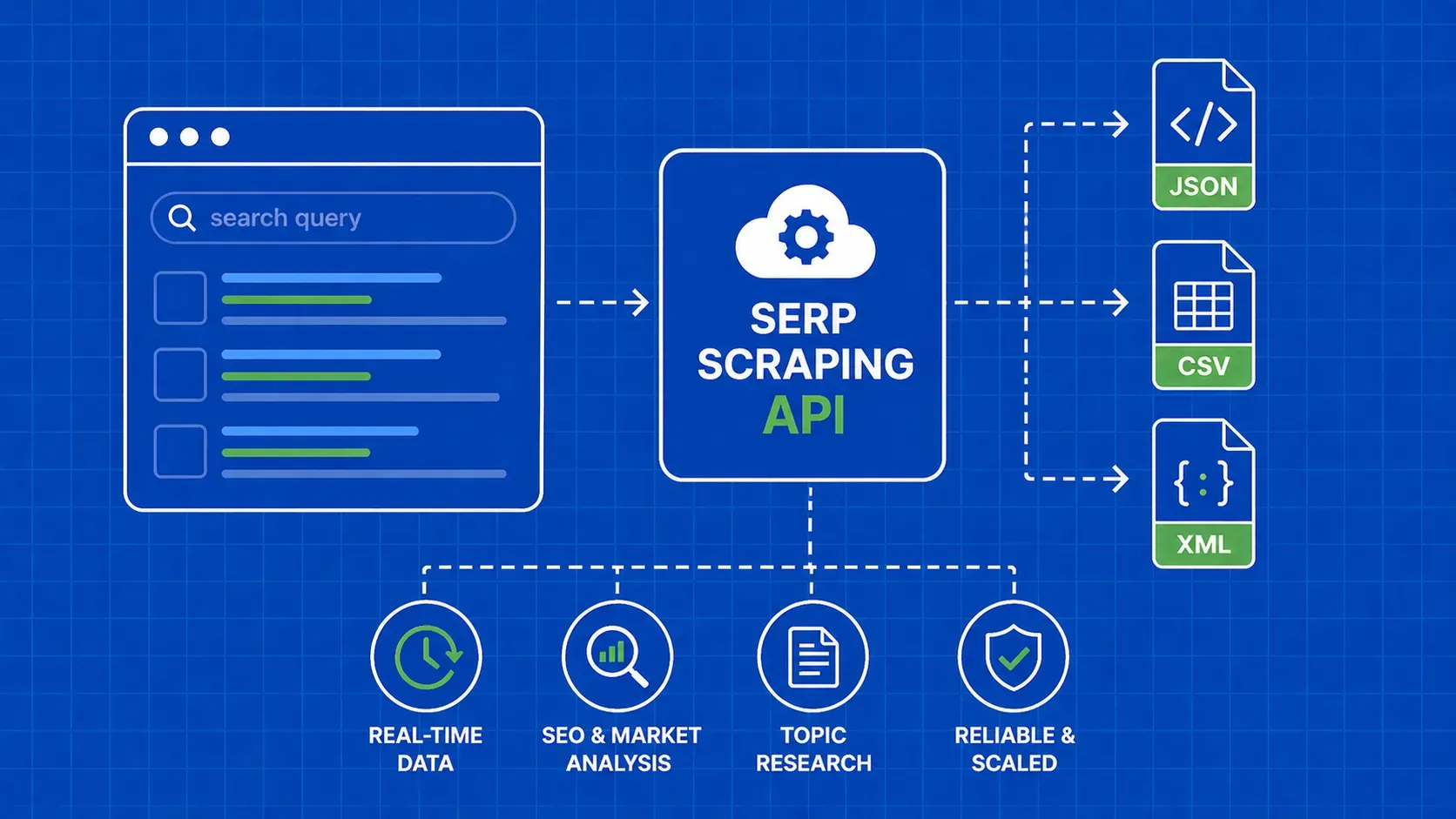
Scraping Google in particular (and other search engines in general) is one of the most challenging tasks in web scraping. And that is because search engines detect automated activity and block access for such users. Their detection mechanism varies from one search engine to another, however, it usually involves detecting the browser’s fingerprint, the IP address and some other aspects (such as mouse movement on page for example).
This being said, you can imagine how setting up a web scraper that can successfully scrape these sites on long term is quite hard. With Web Scraping API’s SERP Scraping API on the other hand, all of these issues (and much more) are taken care of:
- Rotating residential proxies - To ensure a high success rate, only the most qualitative IP addresses are selected for the SERP scraping API.
- Unique fingerprint - We use real and unique browser fingerprints, so that all requests look like they originate from a real browser.
- Custom stealth - A team of experts is constantly working on patching browser properties that may expose automated activity.
Apart from that, when signing up for the SERP API, you sign up for the entire infrastructure and team behind it. You can easily scale your project at any time. Also, if you ever encounter issues or have any questions, when you reach out to support, you will end up talking to one of the engineers working on the actual API. This way, at Web Scraping API, we ensure the lowest response times and the highest level of technical support for our users.