Back to Blog
Guides
Anda MiuțescuLast updated on May 1, 202610 min read

Best Alternatives to Wget: Modern CLI Download Tools Compared

Best Alternatives to Wget: Modern CLI Download Tools Compared
TL;DR: Wget is reliable but aging. If you need parallel downloads, grab aria2. For broad protocol coverage and scripting, curl is the go-to. Want a friendlier API testing workflow? HTTPie (or its Rust sibling xh) fits perfectly. And if you want the closest upgrade path, wget2 adds HTTP/2, multithreading, and a plugin system while keeping the same command patterns you already know.

Wget has been a staple on Unix systems for decades: a single command, a URL, and your file lands on disk. For straightforward recursive downloads and site mirrors, it still works. But the web has moved on. Modern servers speak HTTP/2, downloads benefit from parallelism, and developers increasingly need tools that double as API clients, not just file fetchers.

That is exactly why so many teams are exploring alternatives to wget. Whether you need segmented multi-source downloads that max out your bandwidth, colorized JSON output for quick API debugging, or a CI-friendly request testing framework, there is a purpose-built CLI tool for the job. In this guide, we compare the strongest open-source alternatives to wget, highlight where each one genuinely outperforms the original, and help you pick the right tool for your specific workflow.

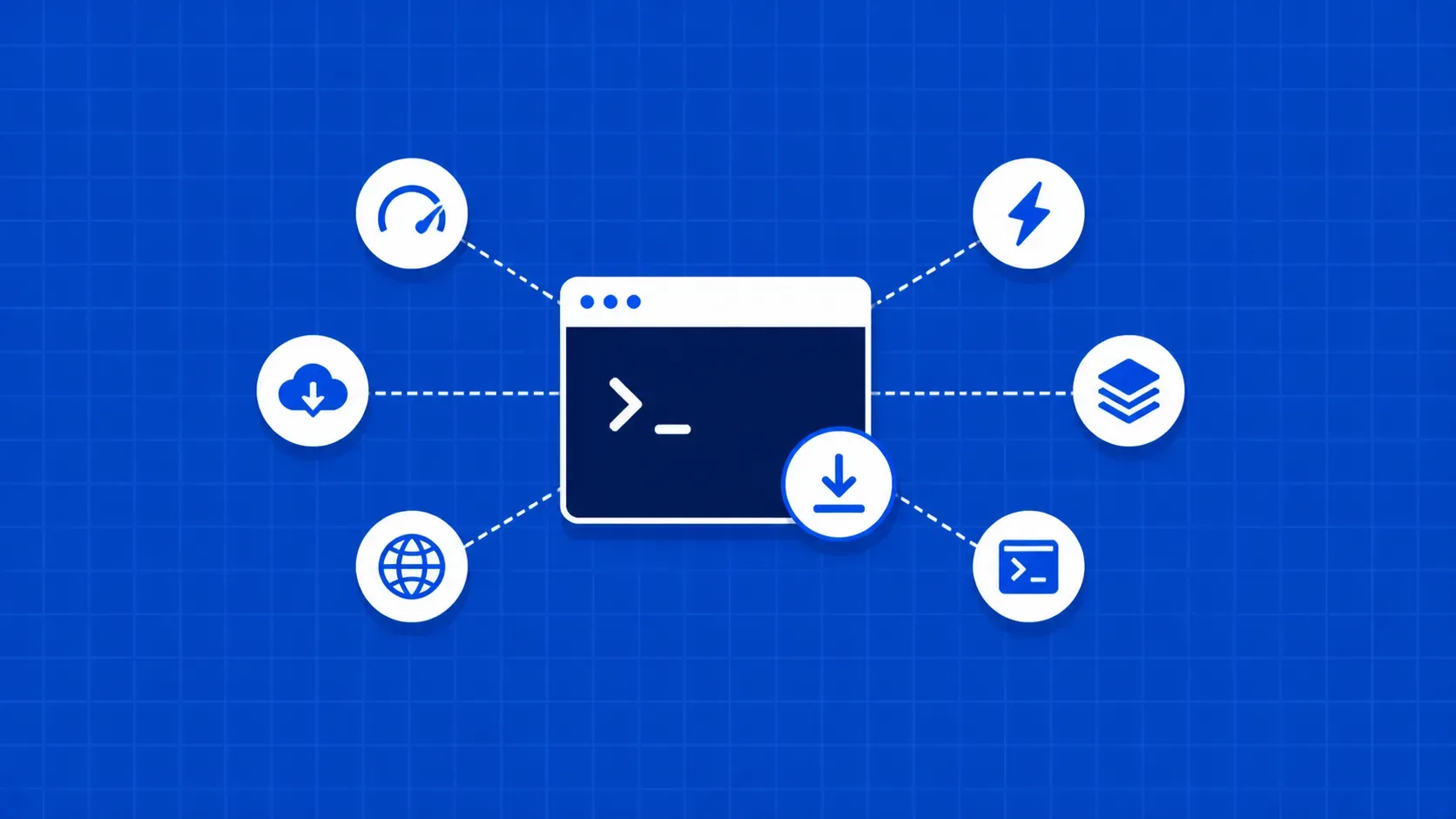
Why Look Beyond Wget?

Wget does one thing well: it downloads files over HTTP and FTP with minimal fuss. Recursive downloading, automatic retries, and bandwidth throttling are baked in. But those strengths come with real limitations.

Wget is single-threaded by design, so it cannot saturate a fast connection when pulling large files. It has no native HTTP/2 support, which means you miss out on multiplexing and header compression that modern servers offer. Its output is plain text with no structured formatting, making it awkward for API exploration. And while wget handles FTP and HTTPS, it does not speak protocols like SFTP, SCP, or BitTorrent.

If any of those gaps matter to your workflow, the alternatives to wget listed below are worth evaluating.

Quick Comparison Table

Before diving into each tool, here is a snapshot of how the top alternatives to wget stack up across the features that matter most.

Tool

Protocol Support

Parallel Downloads

HTTP/2

Resume

Actively Maintained

wget2

HTTP(S), FTP(S)

Yes (multithreaded)

Yes

Yes

Yes

curl

HTTP(S), FTP, SFTP, SCP, LDAP, 25+ protocols

No (single transfer)

Yes

Yes

Yes

aria2

HTTP(S), FTP, SFTP, BitTorrent, Metalink

Yes (segmented + multi-source)

No

Yes

Uncertain (last release Nov 2023)

HTTPie

HTTP(S)

No

Yes

No

Yes

xh

HTTP(S)

No

Yes

No

Yes

hurl

HTTP(S)

No

Yes

N/A

Yes

Axel

HTTP(S), FTP

Yes (segmented)

No

Yes

Yes

wget2: The Direct Successor

If you want the closest thing to a drop-in wget replacement, wget2 is the obvious starting point. Licensed under LGPL-3.0, it is designed to be a superset of the original while adding capabilities wget has always lacked.

The command syntax stays familiar. Most existing wget scripts should work with minimal changes, which keeps migration friction low. But under the hood, wget2 is a fundamentally different engine.

Key Improvements Over wget

According to the wget2 project page on the GNU Savannah repository, the headline upgrades include native HTTP/2 support (with multiplexed streams), multithreaded downloading for faster parallel fetches, built-in compression handling, and a plugin system that lets you extend behavior without forking the source. These features address the biggest pain points of original wget in a single package.

Translating a common wget task is straightforward:

# wget
wget -r -np https://example.com/docs/

# wget2 equivalent (same flags, faster execution)
wget2 -r -np https://example.com/docs/

For teams that rely on recursive mirroring or large batch downloads, wget2 is the path of least resistance.

curl: The Swiss-Army Knife

curl is arguably the most widely deployed command-line transfer tool in existence. It ships with macOS, most Linux distributions, and Windows 10+. It is free, open source, and supports over 25 protocols (HTTP, HTTPS, FTP, SFTP, SCP, LDAP, MQTT, and many more).

Where wget focuses on downloading files, curl focuses on transferring data. That distinction matters: curl excels at crafting custom requests with arbitrary headers, sending POST payloads, and piping responses into other tools. The underlying libcurl library powers countless applications, from PHP's curl_ functions to Python's PycURL bindings.

When curl Beats wget

curl wins when you need protocol breadth, API testing, or integration with other software. A quick example of downloading a file (the wget equivalent of wget https://example.com/file.zip):

curl -O https://example.com/file.zip

Where curl really pulls ahead is in API workflows. Sending JSON, inspecting response headers, and handling authentication are all first-class operations:

curl -X POST https://api.example.com/data \
  -H "Content-Type: application/json" \
  -d '{"key": "value"}'

If you already use curl with proxies for data collection, you know how naturally it fits into scripting pipelines.

aria2: Multi-Source Speed Demon

aria2 is a lightweight, multi-protocol download utility that supports HTTP(S), FTP, SFTP, BitTorrent, and Metalink. Its killer feature is segmented downloading: it splits a single file into multiple pieces, downloads them in parallel, and reassembles them on disk. It can even pull segments from multiple mirrors simultaneously, which can dramatically speed up large file transfers.

Resume support is built in (use the -c flag), and aria2's memory footprint stays small, typically around 4 MB during operation. A JSON-RPC interface lets you integrate it with external UIs or automation scripts.

# Download with 8 parallel connections
aria2c -x 8 https://example.com/largefile.iso

One important caveat: aria2's most recent release (version 1.37.0) shipped in approximately November 2023, and community activity has slowed noticeably since then. The tool still works well, but if long-term maintenance matters to your stack, keep an eye on the project's repository for signs of renewed development.

HTTPie: Developer-Friendly HTTP Client

HTTPie takes a different approach than most alternatives to wget. Instead of optimizing for file downloads, it optimizes for human-readable HTTP interactions. Responses are syntax-highlighted and formatted automatically, JSON payloads are a first-class data type, and the flag syntax reads almost like English.

# GET request with HTTPie
http GET https://api.example.com/users Accept:application/json

# POST with inline JSON
http POST https://api.example.com/users name=Alice email=alice@example.com

HTTPie is available on macOS, Windows, Linux, and anywhere Python runs. It is not the tool for bulk file downloads or recursive mirroring, but for API exploration, endpoint debugging, and quick request prototyping, it is significantly more ergonomic than either wget or curl.

xh and curlie: Modern Ergonomic Clients

If you like HTTPie's syntax but want something faster or more curl-compatible, xh and curlie fill that niche.

xh is written in Rust and licensed under MIT. It mirrors HTTPie's intuitive request syntax while offering noticeably faster startup times and built-in HTTP/2 support. For developers who run dozens of ad-hoc requests per day, the speed difference adds up.

curlie combines curl's engine with HTTPie's formatting. Under the hood, every request goes through curl (so you keep the full protocol support), but the output gets HTTPie-style colorization and structure. Think of it as a UI layer on top of curl rather than a separate HTTP client.

Both tools are actively maintained and work as lightweight alternatives to wget when your primary use case is HTTP request testing rather than file downloading.

hurl: HTTP Request Testing in Plain Text

hurl stands apart from the other tools on this list. Instead of building requests from command-line flags, you write them in plain-text .hurl files that describe a sequence of HTTP requests and assertions.

GET https://api.example.com/health
HTTP 200
[Asserts]
header "Content-Type" == "application/json"
jsonpath "$.status" == "ok"

This declarative approach makes hurl a natural fit for CI/CD pipelines, where you want repeatable HTTP integration tests checked into version control. It supports HTTP/2, can chain requests (using values from one response in the next), and outputs results in JUnit XML for test-runner integration.

hurl is not a wget replacement for downloading files. It is a wget alternative for automated HTTP validation, and in that role it is hard to beat.

Terminal Download Managers Worth Knowing

Beyond the headline tools, a handful of TUI-based download managers deserve a quick mention for readers who want a more interactive terminal experience.

Axel is a lightweight CLI download accelerator that uses multiple connections per file, similar to aria2 but with a simpler feature set. It is actively maintained and works well for straightforward parallel downloads over HTTP and FTP.

getparty is a Go-based CLI tool that focuses on resumable parallel downloads with a progress bar. It is handy for one-off large file grabs.

Surge provides a terminal UI for managing multiple concurrent downloads with visual progress tracking.

Note that some older download managers like uGet have not seen updates since approximately 2021 and should be considered discontinued at this point. Stick with actively maintained projects for anything you plan to rely on in production.

How to Choose the Right Alternatives to Wget for Your Workflow

With so many viable alternatives to wget on the table, picking the right tool depends entirely on what you are actually doing. Here is a quick decision framework:

  • Bulk file downloads or large ISOs: aria2 (segmented parallel downloads from multiple sources)
  • API testing and endpoint debugging: HTTPie or xh (human-readable output, intuitive syntax)
  • Drop-in wget replacement with modern features: wget2 (same flags, adds HTTP/2 and multithreading)
  • Broadest protocol coverage and scripting: curl (25+ protocols, libcurl ecosystem)
  • CI/CD HTTP integration tests: hurl (declarative test files in version control)
  • Simple parallel download acceleration: Axel (lightweight, no extra features)

If you handle multiple use cases, it is perfectly normal to keep two or three of these installed. curl for everyday scripting, aria2 for heavy downloads, and HTTPie for API work is a popular combination among the developers we talk to.

For workflows that involve web data collection at scale, where anti-bot protections, CAPTCHA solving, and proxy management become the real bottleneck, you will eventually need more than a CLI tool alone. That is where a managed extraction layer becomes valuable.

Key Takeaways

  • wget2 is the smoothest upgrade path if you want HTTP/2, multithreading, and plugin support without rewriting your existing scripts.
  • curl is the most versatile all-rounder, covering 25+ protocols and integrating deeply with scripting pipelines and language-level HTTP libraries.
  • aria2 is the fastest downloader for large files thanks to segmented, multi-source parallel transfers, though its maintenance status deserves monitoring.
  • HTTPie and xh prioritize developer ergonomics, making them the top picks for API exploration and request prototyping over file downloading.
  • Always check maintenance status before committing to a tool. Discontinued projects like uGet can leave you stranded when something breaks.

FAQ

Is curl a full replacement for wget?

Not entirely. curl handles a much broader set of protocols and is superior for API work, but it lacks wget's built-in recursive downloading. To mirror an entire site, you would need to script the recursion yourself or pair curl with a crawler. For single-file downloads and HTTP scripting, curl covers everything wget does and more.

What advantages does wget2 have over the original wget?

wget2 adds native HTTP/2 with multiplexed streams, multithreaded parallel downloads, built-in content compression, and a plugin architecture for extending behavior. The command-line syntax stays largely compatible, so existing scripts require minimal changes.

Can aria2 resume interrupted downloads like wget?

Yes. Pass the -c (continue) flag, and aria2 picks up where it left off. It even supports resuming segmented downloads, meaning each parallel chunk resumes independently rather than restarting the entire file.

Which wget alternative is best for downloading entire websites?

wget2 is the closest match for full-site mirroring since it supports recursive downloads with the same -r and -np flags wget uses, but adds parallel fetching. If wget2 is unavailable on your system, the original wget remains the strongest recursive downloader among CLI tools.

Are there wget alternatives that support HTTP/2 out of the box?

Yes. curl, wget2, HTTPie, xh, and hurl all support HTTP/2 natively. aria2 and Axel do not. Check the comparison table above for a quick reference.

Conclusion

Wget earned its place in the sysadmin toolkit, but the landscape of CLI download and HTTP tools has expanded well beyond what it offers. wget2 gives you a near-seamless upgrade with HTTP/2 and parallelism. curl remains the universal Swiss-army knife for anything protocol-related. aria2 dominates when raw download speed matters. And tools like HTTPie, xh, and hurl carve out focused niches for API work and testing.

The right choice depends on your workflow, and there is no reason to limit yourself to just one. Install the tools that match your most common tasks and let each one do what it does best.

When your needs grow beyond downloading files into large-scale web data collection, where rotating proxies, CAPTCHA handling, and anti-bot evasion become the real challenges, WebScrapingAPI can handle that infrastructure so you can focus on the data itself.

About the Author
Anda Miuțescu, Technical Content Writer @ WebScrapingAPI
Anda MiuțescuTechnical Content Writer

Anda Miuțescu is a Technical Content Writer at WebScrapingAPI, creating clear, useful content that helps developers understand the product and its capabilities.

Start Building

Ready to Scale Your Data Collection?

Join 2,000+ companies using WebScrapingAPI to extract web data at enterprise scale with zero infrastructure overhead.