Skip to content
Start free
Back to Blog

webscraper.io Review: Pricing, Limits, and When to Switch

Suciu DanLast updated on 15 min read
webscraper.io Review: Pricing, Limits, and When to Switch
TL;DR: Web Scraper from webscraper.io is a free Chrome and Firefox extension plus a paid Web Scraper Cloud, and it's a sound pick for small and medium recurring jobs on ordinary public sites. Keep it when a few people refresh a handful of sites daily or weekly and someone maintains the selectors. Switch when you need many sites, protected or JavaScript-heavy targets, or code-level control.

Web Scraper is a point-and-click web scraper tool from webscraper.io: a free Chrome extension (also available for Firefox) plus a paid service called Web Scraper Cloud. It's excellent for small and medium recurring jobs on ordinary public sites, and weak at scale, on heavily protected sites, and wherever nobody wants to own selectors.

This review is for analysts, marketers, and operations teams who collect web data without writing code, and for developers deciding whether to keep the tool or replace it. Web Scraper (webscraper.io) is a third-party product. WebScrapingAPI doesn't make it, own it, or partner with its maker.

You'll leave with a verdict, a way to estimate what a job costs, and a choose-by-job table for when you outgrow it.

What is Web Scraper and how does it work?

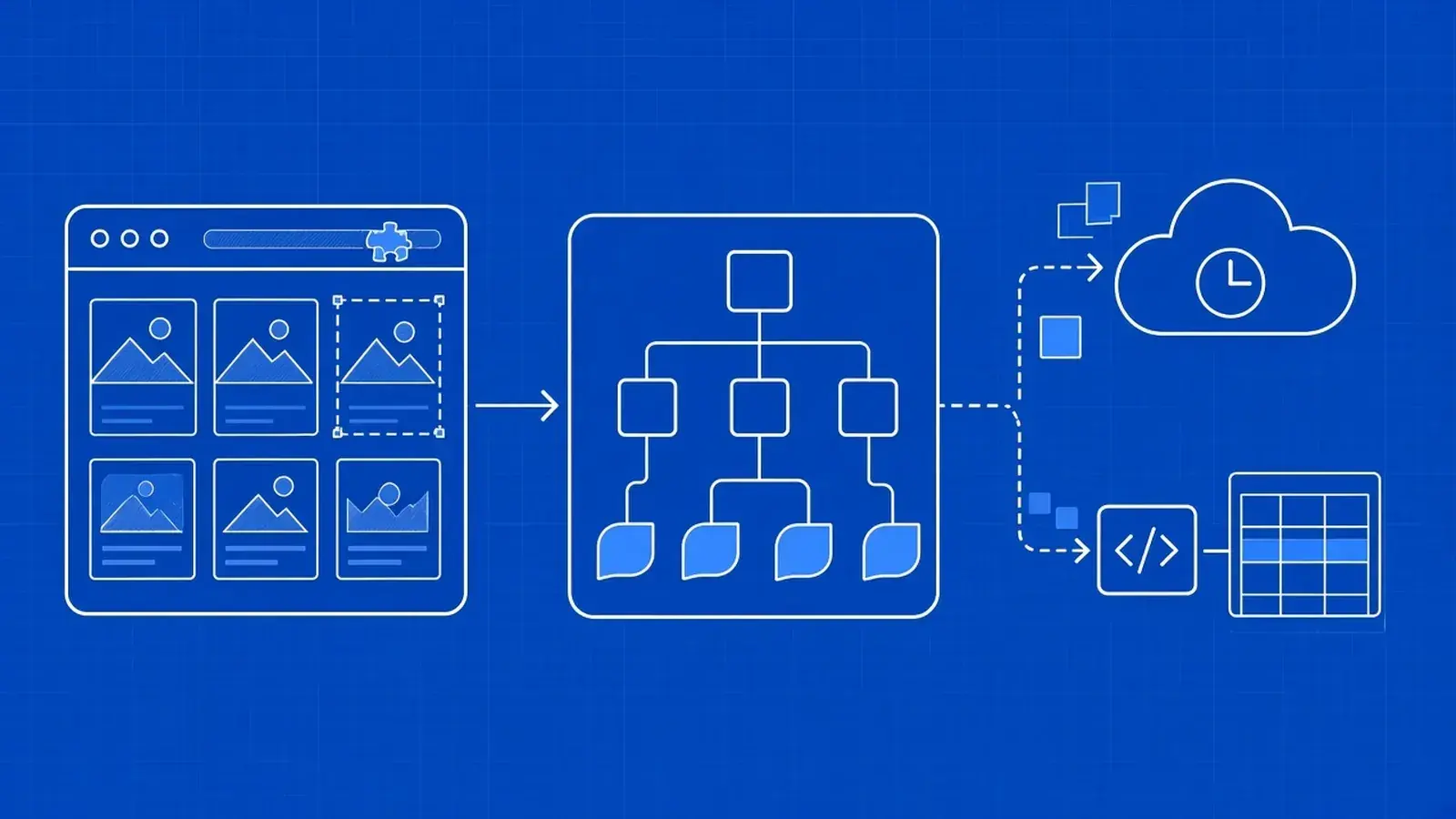
Web Scraper is a point-and-click scraping tool from webscraper.io that runs as a free Chrome or Firefox extension, with a paid Web Scraper Cloud for unattended jobs. You build a sitemap: start URLs plus a tree of selectors that click, follow links, paginate, and extract text, images, tables, or attributes into rows.

Think of a sitemap as a recipe: the start URLs are where it begins, and each selector is a step that either moves the scraper or collects data.

Navigation selectors do the moving. Link selectors open detail pages, pagination selectors walk through numbered pages or "next" buttons, and element click selectors press "load more" buttons or scroll to reveal more content.

Data extraction selectors (text, image, table, HTML, and element attribute) do the collecting. Anything nested under a link selector runs on the page that link opens, which is how one sitemap turns a category listing into one row per product.

You click elements and the extension writes CSS selectors for you, in CSS and jQuery-style syntax rather than XPath. When a generated selector matches too much or too little, you edit it by hand, so keep a CSS selectors cheat sheet open while you build.

A typical listing-to-detail sitemap looks like this:

flowchart TD
    A["Start URL<br/>/category/books"] --> B["Pagination selector<br/>next page / page 2, 3, ..."]
    B --> C["Link selector<br/>each product card"]
    B -.->|"repeats on every listing page"| C
    C --> D["Product detail page"]
    D --> E["Text selector<br/>title"]
    D --> F["Text selector<br/>price"]
    D --> G["Element attribute selector<br/>image URL"]
    D --> H["Table selector<br/>specifications"]
    E & F & G & H --> I["One row per product<br/>export to CSV, XLSX, or JSON"]

Figure 1. A listing-to-detail sitemap: pagination walks the listing, a link selector opens each product page, and four data selectors produce one row per product.

Results export as CSV, XLSX, or JSON. In Cloud, parsers such as regex match, replace text, strip HTML, and virtual columns clean or derive values before export.

Extension or Web Scraper Cloud: what's the difference?

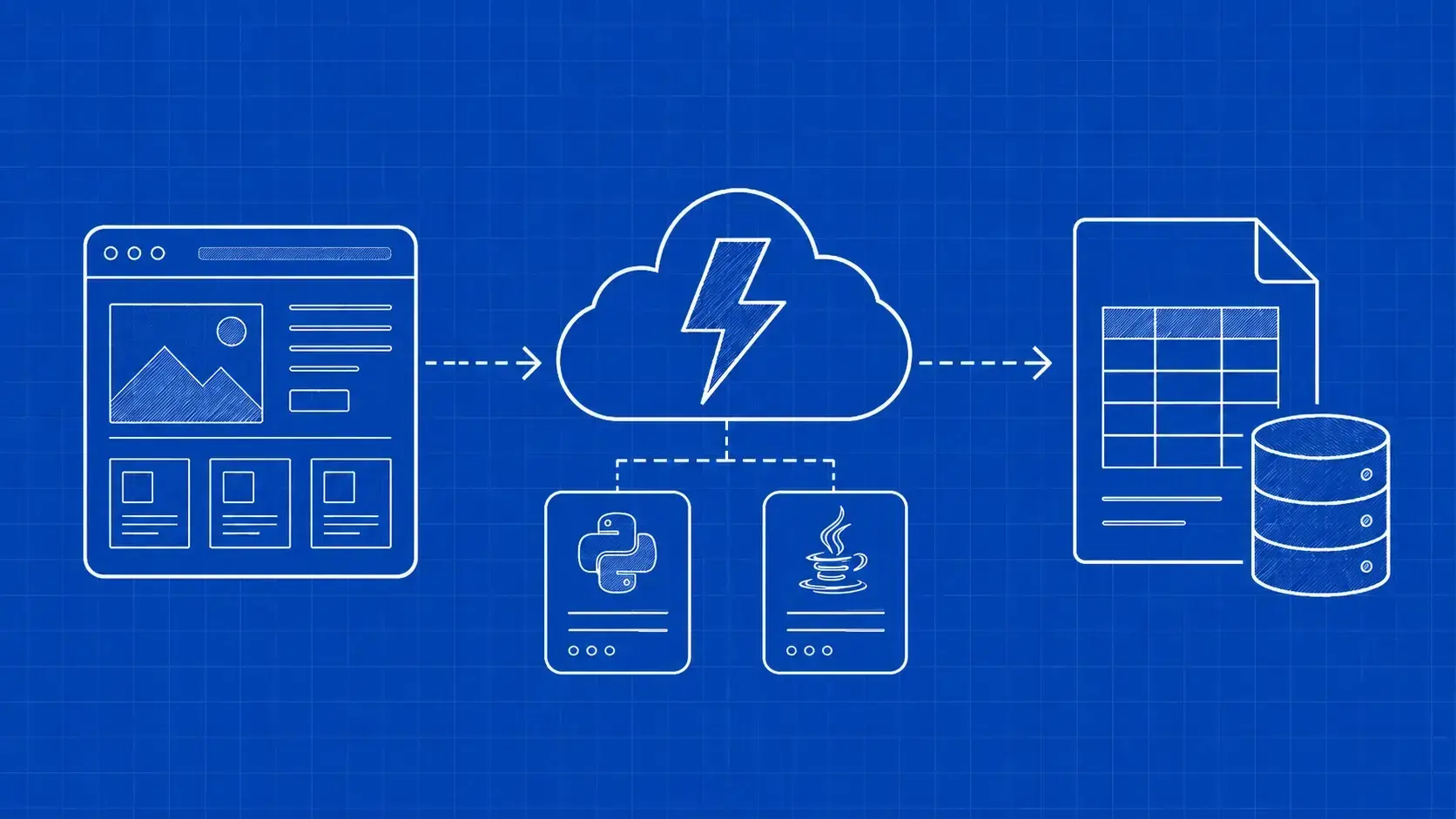
The extension runs inside your own browser, is free, keeps only the latest job's data in local storage, and stops when you close the browser. Web Scraper Cloud runs the same sitemaps on remote servers with scheduling, an API, webhooks, proxies, data-quality checks, and stored results, which is what recurring work usually needs.

Both use the same sitemap format, so you build and test in the extension, then import the sitemap into Cloud when the job needs to run on its own.

Table 1. The extension is where you build, and Cloud is where recurring jobs run.


Web Scraper extension

Web Scraper Cloud

Where it runs

Your own browser

webscraper.io's servers

Cost

Free

Paid plans, with a free trial

Scheduling

None

Yes

API and webhooks

None

Yes

Proxies

Your own connection

Included; residential costs extra

Data storage

Latest job only, stored locally

30 to 60 days, depending on plan

Crawl order

Last-in, first-out

Pseudo-random

Images loaded

Yes

No

Best for

Building, testing, and one-off runs

Recurring, unattended jobs

Two rows explain why results can arrive in a different order. The extension works last-in, first-out, finishing one branch of the site before the next, while Cloud visits discovered URLs in pseudo-random order. Same data, different row order. Cloud also skips images, so test any page whose values depend on them.

How much does Web Scraper cost?

The extension is free. As listed on webscraper.io in October 2026, Web Scraper Cloud has a 7-day free trial, then Project at $50 a month for 5,000 URL credits, Professional at $100 for 20,000, Scale from $200 with unlimited credits priced per concurrent scraper, and custom Enterprise plans.

Table 2. Web Scraper Cloud plans as listed in October 2026. Credits and concurrency, not features, separate the plans.

Plan

Monthly price

URL credits

Concurrent scrapers

Data retention

Project

$50

5,000

2

30 days

Professional

$100

20,000

3

30 days

Scale

From $200, priced per concurrent scraper

Unlimited

2+

60 days

Enterprise

Custom

Custom

Custom

Custom

Prices and limits from webscraper.io's pricing page, October 2026. Check the vendor's site for current terms.

The plans share the scheduler, API, parsers, data-quality monitoring, and exports. What changes is monthly page volume, concurrency, and retention. Scale includes a free US datacenter proxy. Residential traffic was listed at $2.50 per GB in October 2026, which matters if your targets block datacenter IPs.

If price is the main constraint, see our comparison of free web scraping tools.

How do URL credits add up?

One URL credit is one page load, whatever the page contains. A sitemap that opens 40 category pages and 1,200 product pages uses about 1,240 credits per run, so a weekly schedule needs about 5,000 a month. Automatic retries of empty or failed pages and test scrapes up to 500 links are free.

To estimate a job, count every page the sitemap opens, multiply by runs per month, and compare the result with the plan allowance.

Table 3. What a job costs in URL credits. Detail pages drive the total.

Job

Pages per run

Runs a month

Credits a month

Smallest plan that fits

One-off pull of 25 listing pages

25

1

25

Free extension, or a Cloud trial test scrape

Weekly catalog: 40 category pages plus 1,200 product pages

1,240

4

4,960

Project (5,000)

Daily price check of 600 product pages

600

30

18,000

Professional (20,000)

Pages, not records, drive cost. If the listing already shows the fields you need, such as name, price, and stock, skip the detail pages. For the weekly catalog, that drops each run from 1,240 credits to 40.

Watch the margins, too. The weekly catalog in Table 3 leaves only 40 spare credits on Project, so a few extra category pages, or a month with five scheduled runs (6,200 credits), pushes it over. Size the plan for the largest month, not the average one.

What does Web Scraper do well?

Web Scraper is at its best on ordinary public sites with a clear listing-to-detail structure. It's free to build and test locally, handles pagination, clicks, and infinite scroll without code, exports to common formats, and lets a non-developer move the same sitemap into Cloud when the job needs scheduling.

Its strengths in practice:

  • Zero setup. Install the extension and start building. Local runs need no account or server.
  • Visual selection with live preview. You see what each selector matches before you scrape.
  • Multi-level sitemaps. Listings, pagination, and detail pages live in one selector tree.
  • Portable sitemaps. JSON import and export lets you share sitemaps, version them, and move them to Cloud unchanged.
  • Built-in parsers. Cleanup happens in the tool, not in a spreadsheet afterward.
  • Free test scrapes. Cloud tests up to 500 links before spending credits.
  • Integration hooks. Cloud's API and webhooks hand finished jobs to other systems.

For a marketer tracking a few dozen competitor product pages, or an analyst pulling a directory once a quarter, that combination is hard to beat for the price.

Where does Web Scraper fall short?

Web Scraper strains when jobs get big, protected, or fragile. Local runs tie up your browser, Cloud caps a sitemap at 100 selectors and 10 minutes of continuous JavaScript actions per URL, social platforms including LinkedIn aren't supported, and every site redesign means someone fixing selectors by hand.

  • Local runs need your browser. The browser and computer must stay open for the whole job, and only the latest job's data is kept.
  • Cloud execution limits. A sitemap can have up to 20,000 start URLs and 100 selectors, and JavaScript actions such as clicking and scrolling can run for up to 10 continuous minutes per URL.
  • Retention. Cloud keeps job data for 30 days on Project and Professional and 60 days on Scale. If you need history, schedule exports to your own storage.
  • Concurrency. Project runs 2 scrapers at once and Professional runs 3, so busy schedules queue below Scale.
  • Protected sites. webscraper.io itself says compatibility with sites that use advanced anti-bot protection varies, including those behind Cloudflare Turnstile. Scale includes only a free US datacenter proxy, and residential traffic is billed per GB.
  • Social platforms. Cloud doesn't support data extraction from social media platforms, including LinkedIn.
  • Logins. The extension uses your browser session, which raises account and terms-of-service questions (see the legal section).
  • Selector maintenance. When a site changes its markup, someone fixes the sitemap by hand. It's the cost missing from the pricing page, and it grows with every site.
  • Limited code-level control. You can't write custom retry logic, set arbitrary headers, or run your own parsing code.

Is Web Scraper the right tool for your job?

Keep Web Scraper when a few people need structured data from a handful of ordinary public sites, refreshed daily or weekly, and someone is happy to maintain selectors. Look elsewhere when you need many sites, protected or JavaScript-heavy targets, guaranteed freshness, code-level control, or data nobody on your team wants to maintain.

The deciding question is usually not "can Web Scraper scrape this site?" but "who will keep this job working?" Find the row in the table that matches your situation.

Table 4. Choose a tool by job. The right tool depends on who maintains it.

Your situation

Best-fit tool type

Why

Where to go next

A few public sites, weekly refresh, no developers

Web Scraper extension plus Cloud

Cheapest path that works

Stay with Web Scraper

Need it free, one-off

Free extension or other free tools

No spend

Free tools comparison (cost section)

Messy pages, want fields from a prompt

AI extractor

Less selector work

AI tools roundup (tool types section)

Product team, pipeline in code

Scrapy or Playwright

Tests, version control, and full control

Write-code section

Code-owned pipeline, but blocks or rendering are the problem

Scraping API

Fetching and rendering handled for you

Scraping API section

Clicks, permitted logins, or screenshots

Browser automation API

Hosted browser that runs page actions

Scraping API section

Standard data from popular sites

Structured-data API

No selectors to maintain

Buy-data section

Recurring delivery to a warehouse, no maintenance

Data feed or managed service

Provider owns the upkeep

Buy-data section

If the first row describes you, Web Scraper is a sound choice and the rest of this guide is background. Already decided to move? Skip to the migration section below.

What other kinds of web scraper tools are there?

Web scraper tools fall into five groups: browser extensions like Web Scraper, no-code desktop or cloud apps such as Octoparse and ParseHub, AI extractors that read pages from a prompt, code libraries and frameworks like Scrapy and Playwright, and scraping APIs or ready-made data services that take over fetching, rendering, and maintenance.

Browser extensions. Web Scraper is the best-known example. They're cheap and visual, and their ceiling is your browser unless a cloud service sits behind them.

No-code desktop and cloud apps. Tools such as Octoparse and ParseHub offer visual workflow builders, site templates, and hosted runs, with the same maintenance question when sites change.

AI extractors. These return fields from a plain-language prompt instead of selectors. They help on messy layouts and need spot checks. Our roundup of AI web scraping tools covers the category in depth.

Code libraries and frameworks. Scrapy, Playwright, and similar libraries give developers full control, and full ownership of every fix.

Scraping APIs and data services. These take over proxies, rendering, retries, or parser upkeep, and return pages for your code or finished records on a schedule.

For the lightest possible option, Google Sheets' IMPORTXML function pulls values from simple static pages into a spreadsheet with no install.

If you want specific products compared and ranked within each group, see our ranked list of web scraping tools.

When should you write code instead?

Write code when the scraping logic is part of a product, when you need tests, version control, and custom retries, or when sites change often enough that you want failures to raise alerts. Scrapy suits large crawls of static pages, and Playwright suits sites that need a real browser to render or interact.

Code makes a sitemap's rules testable: an assertion that every row has a price can alert someone before bad data reaches a dashboard.

Scrapy is a Python framework for fast crawls of static pages. Playwright drives real browsers for pages that build content with JavaScript. The web.dev rendering on the web explainer shows why such pages look empty to a plain HTTP request.

Code moves the work rather than removing it: selectors still break, but you find out faster.

When should a scraping API do the fetching?

Use a scraping API when your code should own parsing and storage but not proxies, browser rendering, retries, or blocks. You send a URL, optionally with rendering, location, or page actions, and get back HTML, JSON, or a screenshot, so the pipeline stays in your repo without running browser fleets.

It's the usual next step for teams that spend more time keeping requests working than parsing data. You can compare web scraping APIs by what they return, from a single page to a whole-site crawl.

If your sitemaps rely on element click selectors, scrolling, or waiting for content to appear, a browser API for clicks, waits, and screenshots is the closest equivalent: you describe the actions, and a hosted browser runs them and returns HTML, JSON, fields, or a screenshot.

When should you buy data instead of scraping it?

Buy or subscribe to data when the sources are popular and the fields are standard, like products, prices, reviews, listings, or jobs, and nobody wants to own selectors. A structured-data API or a scheduled feed returns clean records, and the provider absorbs site changes, which is often cheaper than a person fixing sitemaps.

This is the most practical alternative to web scraping itself. A structured data API for 116 sources returns records with consistent fields, while WebScrapingAPI handles source access, extraction, parser maintenance, and quality monitoring.

If what you really pay Cloud for is the schedule, scheduled data feeds deliver recurring structured data with no sitemap to maintain.

Compare a feed's cost with your Cloud plan plus the hours spent fixing selectors. For one or two stable sites, Web Scraper usually wins. For a dozen changing sites, it often doesn't.

How do you move off Web Scraper without losing work?

Export every sitemap as JSON first, because it records your start URLs, selectors, and page structure. Then write down the fields, the refresh schedule, and a sample of known-good rows. Rebuild that spec in the new tool, run both side by side for a cycle, and compare the outputs before switching off Cloud.

The sample rows tell you whether a difference comes from the new tool or the site. Download Cloud job history too, before retention expires. For the detailed process, follow our step-by-step guide to moving a Web Scraper sitemap to another tool.

Scraping public pages is generally lawful in many places, but legality depends on the data, the site's terms, and your jurisdiction. Respect robots.txt, avoid personal data you can't justify, don't scrape behind logins you aren't permitted to automate, and review what a browser extension can read before installing it.

Our guide on whether web scraping is legal goes deeper. Three points apply to Web Scraper in particular.

First, robots.txt. The Robots Exclusion Protocol (RFC 9309) is how sites tell crawlers which paths to avoid. It isn't access control, but honoring it is the baseline.

Second, logins. The extension can reach anything your account can see, and many sites' terms prohibit automated account access. Get permission first.

Third, the extension itself. Chrome's guide to extension permission warnings explains what a scraping extension can read and change. Review them, especially on a work browser.

This isn't legal advice. Talk to counsel about your use case.

Frequently asked questions

Is Web Scraper free?

Yes, the Chrome and Firefox extension is free for scraping inside your own browser. You pay only for Web Scraper Cloud, which adds scheduling, an API, proxies, and stored results. Cloud plans offered a 7-day free trial in October 2026, and test scrapes of up to 500 links don't use credits.

What is a URL credit in Web Scraper Cloud?

A URL credit is one page load in Web Scraper Cloud, no matter how many records the page holds. A listing page with 100 products costs one credit, while opening those 100 product pages costs 100. Automatic retries of empty or failed pages don't use extra credits.

Can Web Scraper handle pagination and infinite scroll?

Yes. Pagination and link selectors follow "next" buttons and numbered pages, and element click selectors press "load more" buttons or scroll to load more items. Build the selector tree so pagination sits above the data selectors, then preview a few pages before running the whole sitemap.

Can Web Scraper scrape JavaScript-heavy websites?

Usually, because it runs in a real browser that executes page scripts. In Web Scraper Cloud, a sitemap can run JavaScript actions such as clicking and scrolling for up to 10 continuous minutes per URL. Sites with aggressive bot protection may still fail, so test a target before committing.

Can Web Scraper scrape pages behind a login?

The extension runs in your own browser session, so it can see pages you're logged into. That doesn't make it allowed: many sites forbid automated access to accounts in their terms. Web Scraper Cloud also doesn't support social media platforms, including LinkedIn, so check the target first.

Does Web Scraper solve CAPTCHAs?

Not as a dedicated feature. Cloud jobs use proxy rotation, retries, and failover to reduce interruptions, and webscraper.io says compatibility with protected sites varies by site. If CAPTCHAs block your target regularly, a scraping API or managed data service that handles access for you is usually more dependable.

Is Web Scraper good for large-scale scraping?

It can scale for structured public sites, especially on the Scale plan with unlimited URL credits priced per concurrent scraper. Large programs across many changing or protected sites usually outgrow it, because selector upkeep, concurrency, and proxy costs grow faster than the plan price suggests.

What is the best alternative to Web Scraper?

It depends on the job. Other no-code apps suit visual workflows, AI extractors cut selector work, Scrapy or Playwright suit teams that want code, scraping APIs handle blocks and rendering, and data APIs or feeds remove maintenance entirely. Match the tool to who will maintain it.

What should you do next?

Done maintaining sitemaps? Tell us the sources, fields, and schedule, and Managed Data runs collection, quality checks, and delivery for you.

Prefer to keep scraping in your own code? Scraper API starts with 5,000 free requests, JavaScript rendering and geotargeting cost no extra credits, and failed requests aren't billed.

About the Author

Suciu Dan, Co-founder @ WebScrapingAPI

Suciu Dan

Co-founder

Suciu Dan is the co-founder of WebScrapingAPI and writes practical, developer-focused guides on Python web scraping, Ruby web scraping, and proxy infrastructure.

Start Building

Ready to Scale Your Data Collection?

Join 2,000+ companies using WebScrapingAPI to extract web data at enterprise scale with zero infrastructure overhead.