Skip to content
Start free
Back to Blog

Profit Scraper: Availability and Safer Alternatives

Mihai MaximLast updated on 12 min read
Profit Scraper: Availability and Safer Alternatives
TL;DR: Do not assume Profit Scraper is an available service from an old review or search snippet. Verify the current operator, then replace the specific research task with marketplace research, a suitable analytics tool, or an authorized data pipeline that separates observations from profit assumptions.

You follow a product-research recommendation and land on a domain-parking page. The old feature list is no longer a reliable setup guide. That is the practical problem with evaluating Profit Scraper today.

During this article's September 10, 2026 check, the profitscraper.com domain displayed a domain-registration landing page rather than an operating product interface. This observation does not establish when a service changed, whether a former account still exists elsewhere, or whether another operator offers a similarly named product. It does mean that a new integration should not begin with an old sign-up recommendation.

For developers researching marketplace products, the useful next step is to identify the missing output. Do you need current offers, sold-price evidence, supplier comparisons, or an estimate built from your own costs? Those are separate capabilities, and they may come from different systems.

This guide builds a replacement workflow around those distinctions. It is not a hands-on review of an active Profit Scraper account, and it does not claim that a particular tool will make a product profitable. The goal is a reproducible dataset and a defensible decision, with the uncertainties visible to the person using it.

Amazon listings can supply that evidence, and scraping Amazon product data walks through collecting prices, ratings, and ASINs with Python. For prices and ratings by ASIN without writing a parser, see our Amazon Scraper API quick start.

Verify Profit Scraper availability before entering credentials

A familiar domain is not sufficient evidence of a familiar operator. If a formerly product-specific address now shows unrelated hosting or parking content, stop treating it as an authenticated application entry point. Do not submit old credentials, payment information, or marketplace tokens merely to see what happens.

Verify the operator independently through current, official support and documentation channels. Check that the product identity, terms, and account flow agree. If you cannot establish those facts, treat the integration as unavailable for your project rather than trying to reconstruct access from third-party tutorials.

Search results can retain older descriptions after a page changes. That mismatch is a reason to inspect current evidence, not to choose whichever version makes the article more convenient. This guide deliberately does not assign a closure date or repeat old pricing because the live page does not support those claims.

Keep the same standard for a replacement. A current marketing page establishes that a vendor advertises a workflow; it does not prove your required export, account entitlement, or data accuracy. Verify those in a bounded trial before making the tool a dependency.

For an existing production integration, inventory any scheduled jobs and credentials through the service that issued them. Do not let an abandoned experiment continue consuming tokens or generating unexplained errors. A change in product availability should trigger a dependency review, with a named owner and a clear decision about whether the job remains authorized and useful.

Define the output you need to replace

“Find profitable products” combines collection, matching, market interpretation, and a financial model into one phrase. Split it into inputs before evaluating a substitute for Profit Scraper.

Required output

Suitable starting point

What it does not establish

Current purchasable listings

A documented marketplace API

Completed sales or your margin

Historical sold-price research

Marketplace research tools

Future demand for your exact offer

Candidate and competitor analysis

A product-research application

Independent verification of every estimate

Supplier offer monitoring

Authorized API, export, or collection workflow

Supplier reliability or landed cost by itself

Contribution estimate

Your own reviewed cost model

Guaranteed accounting profit

Write the minimum record next. For current offers, that might include listing identifier, variant, condition, amount, currency, shipping destination, and observation time. For sold-price research, include the market and time window. Do not ask a collector to supply a field its source does not expose.

Then define the decision the record supports. A shortlist for analyst review needs different assurance than an automated purchasing rule. Keep the first version read-only so bad matches cannot directly trigger commercial actions.

This separation also prevents vendor comparisons from becoming misleading. An analytics interface and a retrieval API can both be useful without replacing one another. The broader market-research scraping workflow is a useful companion when your requirements extend beyond one marketplace or research application.

Use marketplace research for sold-price questions

An asking price is not a completed transaction. If the question is what comparable items actually sold for, start with a source designed to answer that question rather than collecting active listings and renaming the price column.

eBay's Product Research documentation describes historical research, including sold-price information and filters for attributes such as condition, location, and listing format. Review the official Product Research help page for the current interface and access details. This is a first-party research route, not a promise of unrestricted programmatic access to the same dataset.

Construct comparable groups carefully. A refurbished unit with a warranty is not interchangeable with an untested unit sold for parts. A bundle containing accessories can distort a comparison with the main item alone. Record exclusions so a teammate can understand why a result was considered relevant.

Preserve the research period. A historical aggregate answers a question about that window, not necessarily today's market. If the decision concerns a seasonal product, make the comparison period part of the review rather than combining all available history into a single unexplained average.

Use the research output to challenge a candidate, not simply confirm it. Look for reasons the apparent opportunity disappears when condition, shipping, or product identity is matched correctly. A useful process can reject an attractive-looking candidate with a clear explanation. That is a successful research outcome even though it produces no listing to publish.

Evaluate ZIK Analytics for an analyst-led workflow

ZIK Analytics presents eBay product and competitor research as part of its offering. That makes it a relevant candidate when you want an analyst interface for investigating marketplace opportunities. Its official eBay product-research page supports that positioning; it should not be read as independent proof of future sales or returns.

Treat the trial as a workflow evaluation. Give an analyst a small set of known product categories and ask them to explain the evidence behind each retained candidate. Record where a metric comes from, its stated period, and whether it represents observation or estimation.

For developers, the next question is delivery. Can the selected account provide the fields your application needs through an approved export or integration? If not, the tool may still fit as a human research station. Do not quietly turn a manual dashboard into an assumed data service.

Compare against a baseline your team can understand. For example, ask whether the interface helps resolve ambiguous product matches faster or makes research easier to review. Measure that during your own trial; do not borrow a vendor testimonial as your team's expected result.

Keep commercial operations separate from evidence gathering. Candidate discovery should not automatically authorize supplier orders, listing changes, or purchasing. Clear boundaries make the evaluation safer and produce a more honest answer about what the replacement actually improves. A product finder may help the research stage while leaving fulfillment, cost accounting, and catalog governance unchanged.

Use the Browse API for current listing data, not a sales-history shortcut

The eBay Browse API documents search and details for purchasable items, including identifiers and product information. That is useful when your application needs structured current-listing input. Its official overview describes the supported resources and search behavior.

Do not infer that this makes it a general sold-history feed. A developer integration must be built around the actual endpoint contract and applicable access requirements. Research tools visible to a seller and APIs available to an application are distinct surfaces, even when they belong to the same company.

Start with a field-mapping document rather than a large ingestion job. Map source identifiers and values to your internal schema, note optional fields, and specify how you represent an absent value. Keep marketplace context with the request and the record so an amount is not later compared against another region by accident.

Pagination and refresh behavior deserve explicit tests. Deduplicate by the relevant source identifier, retain observation times, and distinguish a listing that is no longer returned from a request that failed. A missing page of results should not silently become evidence that products disappeared.

If additional permitted sources require page extraction, isolate those adapters from the marketplace API client. The JavaScript web scraping guide can help with the extraction side, but the normalized model must still preserve each source's meaning. A unified schema is useful only when it does not pretend that different measurements are identical.

Match products before calculating a margin

Two offers can have similar titles and still describe different goods. Complete product matching before comparing their amounts. Prefer stable product identifiers where available, then verify variant, condition, quantity, and included accessories. Preserve the source listing identifier even after linking it to an internal product record.

Put uncertain matches into a review queue. Do not replace uncertainty with a numeric confidence score unless you have a defensible method for producing and interpreting that score. A simple reason such as “bundle quantity unclear” is often more useful to a reviewer.

Separate observations from calculations. Store the supplier's displayed price and the destination used to obtain it, then compute a scenario using explicitly supplied costs. Keep the calculation version so a later change does not make an older decision impossible to reproduce.

Consider this synthetic example, expressed in one currency and before tax. It illustrates arithmetic, not a forecast or a vendor result:

Assumed component

Illustrative amount

Expected selling receipt

40.00

Product acquisition cost

18.00

Shipping cost paid by you

5.00

Assumed selling and payment fees

6.00

Assumed per-order risk allowance

2.00

Remaining contribution

9.00

The calculation is 40 minus 18 minus 5 minus 6 minus 2. It excludes overhead, tax treatment, and any costs not listed. Calling the remainder guaranteed profit would be wrong. Replace every assumption with reviewed inputs appropriate to your operation, and label unknown costs explicitly rather than quietly setting them to zero.

Build freshness and failure reporting into the pipeline

A price observation without a time is difficult to use responsibly. Save when the source was checked, what scope was requested, and whether the run completed. If the source provides its own update timestamp, preserve that separately from your retrieval timestamp.

Define freshness according to the decision. A research shortlist and a purchase-time availability check have different needs. Rather than promising a universally correct refresh interval, choose one during the pilot and review whether it leaves decisions dependent on stale evidence.

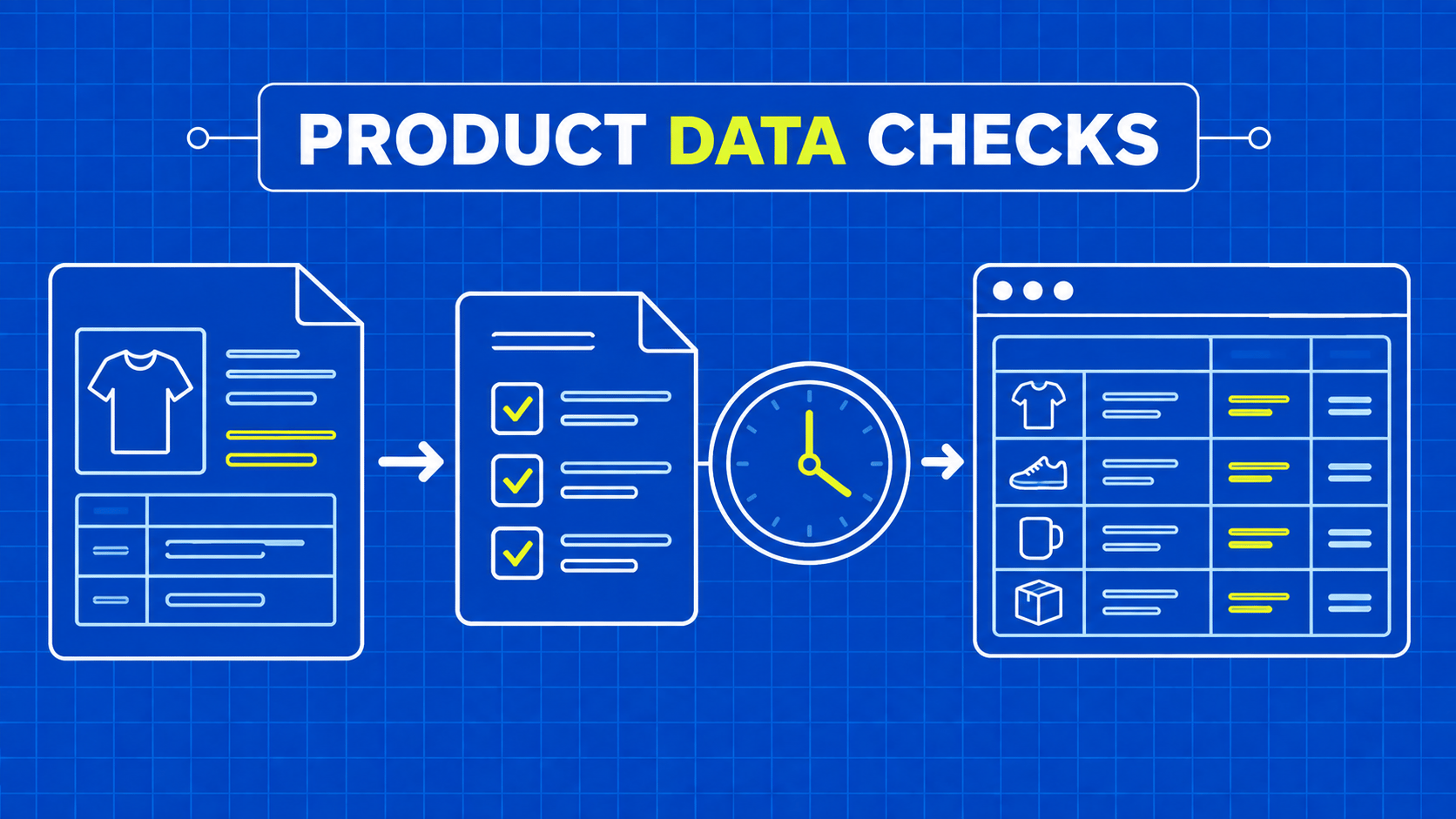
Track invalid and incomplete records as first-class outcomes. A collector can return HTTP success while retrieving a login page, a notice, or a layout with missing fields. Validate the expected content and mark the run incomplete when essential fields cannot be extracted. Do not overwrite a known value with an empty string merely because parsing failed.

Add a small set of controlled fixtures covering variant ambiguity, missing currency, unavailable listings, and duplicate records. These fixtures test your transformations without repeatedly probing a live service. Keep authorized live smoke tests bounded and separate from your normal processing tests.

Operational ownership matters after launch. Assign an alert destination and a person who can pause downstream use of questionable data. The principles in automated web scraping apply here: collection is a recurring system with observable outcomes, not just a script that once produced a spreadsheet.

Run a pilot that can reject the replacement

Define acceptance criteria before evaluating a tool or building an adapter. Choose a varied sample and list the required fields, review steps, and delivery format. Include cases likely to fail so the pilot tests error handling rather than only demonstrating a happy path.

Compare usable reviewed records, not raw rows. Record incorrect matches, missing context, stale observations, and time spent resolving them. Those measures tell you whether the workflow helps your team. They do not establish universal product superiority, and a small sample should not be promoted as a statistically representative benchmark.

Test the handoff to another developer or analyst. They should be able to explain an observation, rerun the approved collection procedure, and identify the assumptions behind a calculation. If they cannot, improve the schema and documentation before increasing volume.

Include one recovery exercise: interrupt a scheduled run and confirm that the previous snapshot remains identifiable as old. A user should not see an unchanged value under a newly updated timestamp and assume it was rechecked. This is a small test with a direct effect on whether people trust the resulting dataset for the right reasons.

Finish with an explicit decision: adopt for a limited research role, continue evaluating, or reject. Document the owner, scope, costs measured during the trial, and exit procedure. Replacing Profit Scraper is not about recreating every remembered feature. It is about restoring a specific capability with evidence you can inspect and a process you can maintain.

A similar decision applies to Niche Scraper, and our comparison of Niche Scraper alternatives matches each tool to the research task, market, and evidence you need.

Key Takeaways

  • Verify current product identity before trusting old reviews, sign-up links, or credentials prompts.
  • Separate current offers, historical sales research, and your own cost estimates.
  • Match product variants and conditions before comparing amounts.
  • Treat an API contract and a seller research interface as different access surfaces.
  • Evaluate reviewed record quality and reproducibility before expanding the workflow.

FAQ

Should a dataset contain buyer names?

Not for a product-level research task unless a specific authorized purpose requires them. Design the schema around products, observations, and permitted aggregate evidence. Excluding unnecessary personal information reduces exposure and makes access controls and retention easier to manage. Review requirements before adding customer-level fields to an otherwise product-focused pipeline.

Can screenshots replace structured research notes?

Only for limited supporting context. A screenshot can help explain what an analyst saw, but it is difficult to validate, search, or compare systematically. Keep the relevant structured fields and source reference as the primary record. Store screenshots only when permitted and useful, with clear retention and access rules.

Should a pilot use a production purchasing account?

Prefer a separate, narrowly authorized research setup when the platform supports it. The pilot should not have permissions to make purchases or alter live listings unless those actions are explicitly part of an approved test. Keeping the test read-only reduces the consequence of an incorrect match or configuration mistake.

Conclusion

An old product name is not a reliable architecture decision. Start by verifying whether the service and operator can actually be established today. When they cannot, preserve the useful research objective and replace the workflow rather than repeating unsupported availability claims.

Use marketplace research for historical sales questions, documented interfaces for current listings, and your own reviewed model for cost assumptions. Keep identity, observations, and interpretation separate. A collector should never turn an unknown value into a confident profit claim simply because a downstream table expects a number.

If the resulting design includes authorized page retrieval, consider WebScrapingAPI's Scraper API as a retrieval component alongside your matching and validation logic. Keep the pilot bounded, measure the work required to produce usable records, and promote the workflow only when another person can reproduce and explain its output. For structured e-commerce datasets without building the collector, see our Data API.

About the Author

Mihai Maxim, Full Stack Developer @ WebScrapingAPI

Mihai Maxim

Full Stack Developer

Mihai Maxim is a Full Stack Developer at WebScrapingAPI, contributing across the product and helping build reliable tools and features for the platform.

Start Building

Ready to Scale Your Data Collection?

Join 2,000+ companies using WebScrapingAPI to extract web data at enterprise scale with zero infrastructure overhead.