Back to Blog
Science of Web Scraping
Raluca PenciucLast updated on May 13, 202610 min read

What Are Rotating Proxies? Guide to IP Rotation for Web Scraping

What Are Rotating Proxies? Guide to IP Rotation for Web Scraping
TL;DR: So what are rotating proxies, in one line? Proxy servers that assign a different IP to each request from a managed pool, which is how scrapers slip past per-IP rate limits, CAPTCHAs, and geo-filters. This guide covers how rotation works, the four pool types, setup code in three languages, and how to pick a provider.

What are rotating proxies? In one sentence: proxy servers that automatically swap your outbound IP from a managed pool, either on every request or after a configurable time window. That single trick is what makes large-scale web scraping, SERP tracking, and ad verification practical without your scrapers getting blocked after the first few hundred requests.

If you have spent any time scraping, you have felt the failure mode. One IP, one fixed User-Agent, and the target's anti-bot system shuts the door in under a minute. A rotating proxy fixes the IP half of that problem by spreading requests across many addresses, so no single IP looks suspicious enough to ban.

This guide is the practical version of the topic. We will define a rotating proxy, separate it from static proxies and VPNs, walk through the four pool types you will see today, show working setup code in cURL, Python, and Node.js, then close with a buyer checklist and the common mistakes that defeat rotation in practice.

What Are Rotating Proxies? A Plain-Language Definition

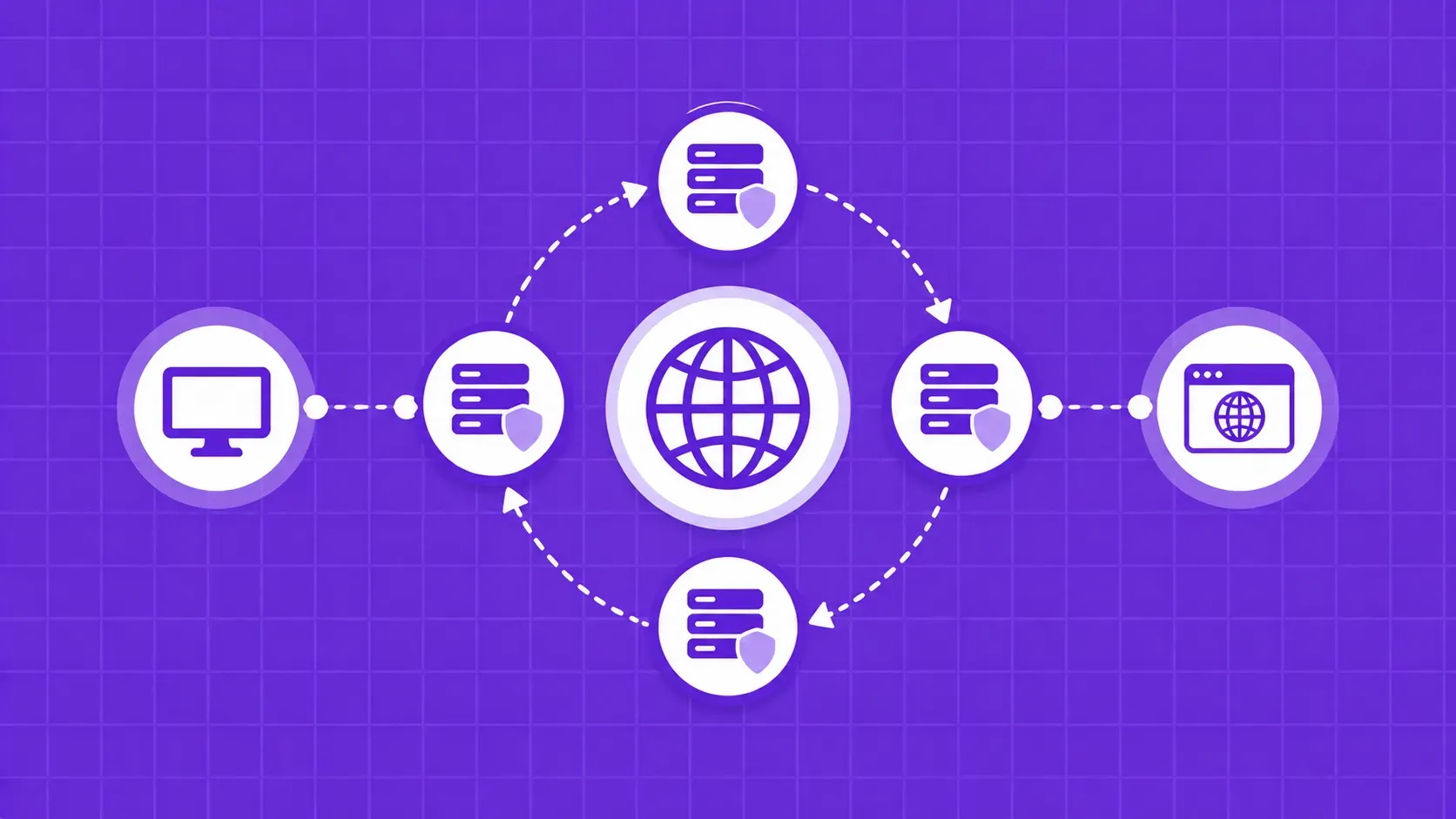
A rotating proxy is a proxy server that automatically assigns a different outbound IP to each request, or after a set time window, by drawing from a managed pool of addresses. Instead of routing your traffic through one fixed IP, the provider sits between you and the target site, swaps the IP on the fly, and exposes a single gateway endpoint to your code.

So when developers ask what are rotating proxies in practical terms, the short answer is: a way to spread requests across many IPs without writing your own rotation logic. That single architectural choice is what makes large-scale scraping, geo-distributed testing, and anti-bot evasion practical for a small team.

Rotating vs Static Proxies: Key Differences

Aspect

Rotating proxy

Static proxy

IP per request

New IP from a pool

Same fixed IP

Session persistence

Only with sticky mode

Yes by default

Ban resistance

High

Low once flagged

Cost model

Per GB or per request

Per IP per month

Best for

Crawling, SERP, monitoring

Logins, account apps

A sticky session proxy is the middle ground: a rotating provider that pins the same IP for a configurable window. Most static vs rotating proxies debates collapse once you realize sticky sessions cover the gap.

How Proxy Rotation Actually Works (Request-Based vs Time-Based)

Rotation runs in one of two modes. Request-based rotation swaps the outbound IP on every new TCP connection. The provider's gateway accepts your request, picks an IP from the pool, opens a connection to the target, and returns the response. The next request lands on a different IP.

Time-based rotation, or sticky session mode, pins the same IP for a configurable window, usually 30 seconds to 30 minutes. You opt in by appending a session ID to your proxy username, which tells the gateway to keep that session on one upstream IP until the window expires. In both modes the rotation logic lives at the provider's backconnect gateway, so you never touch the underlying proxy list.

Types of Rotating Proxies

Pool composition varies, and so do trust, speed, and price. The four categories you will run into today are residential, datacenter, mobile, and ISP. Vendor definitions still shift across providers.

Rotating Residential Proxies

Rotating residential proxies draw from IPs that ISPs assign to real homes. Because the IP is registered to an actual subscriber, end servers cannot easily tell that a proxy is in front of you, and rotation makes traffic look like many separate residential users rather than one busy client. That is the highest practical trust signal short of mobile. The trade-off is cost and speed: residential bandwidth is harder to source than datacenter capacity, so prices run higher per GB. Choose a provider with a transparently consent-based pool, since the legal posture of your scraper depends on it.

Rotating Datacenter Proxies

Rotating datacenter proxies are issued from servers in cloud or hosting facilities. They are fast and cheap, which is why they dominate light scraping and high-volume crawling against less-defended targets. But every datacenter IP carries an ASN that anti-bot systems can fingerprint, and providers serious about banning proxies can blanket-block whole ranges. Use them where speed matters more than stealth, and keep a residential fallback ready for the moment your success rate drops.

Rotating Mobile Proxies

Rotating mobile proxies route through IPs assigned by mobile carriers. Because carriers reuse the same IP across many subscribers through CGNAT, mobile addresses are very hard to fingerprint as a single actor. Some vendors describe them as almost undetectable, though that depends on the target and the rest of your fingerprint. They are the slowest and most expensive option, so reserve them for the hardest targets such as social platforms and sneaker drops.

Rotating ISP Proxies

Rotating ISP proxies sit between the two: hosted in a datacenter but registered to a real ISP, keeping datacenter speed while inheriting a trust signal closer to residential. Vendor definitions of this category are still evolving at the time of writing, so confirm how a provider classifies a given pool before you commit budget.

When and Why to Use a Rotating Proxy

You rarely need a rotating proxy for a one-off curl. You need one once a workflow crosses two thresholds: enough volume that a single IP gets rate-limited, or enough sensitivity that the target fingerprints clients. So what are rotating proxies actually for? Use the map by job:

  • Large-scale scraping and price monitoring. Residential for protected catalogs, datacenter for the rest.
  • SERP and search-result tracking. Rotating residential or ISP; search engines flag datacenter ranges aggressively.
  • Ad verification and brand protection. Rotating residential with geo-targeting per market.
  • Sneaker copping and ticket drops. Rotating mobile; those sites lean hardest on IP reputation.
  • Social media automation. Rotating mobile with sticky sessions per account.
  • QA and localization testing. Any rotating type with country-level geo controls.

Pros and Cons of Rotating Proxies at a Glance

What are rotating proxies giving you in practice? Here is the honest accounting.

Pros

  • High resistance to IP bans because traffic spreads across many addresses.
  • Easy to scale; the provider runs the pool for you.
  • Built-in geo diversity for region-specific data.
  • Often the only practical way past per-IP rate limits and CAPTCHAs.

Cons

  • Slower per request than a static proxy on the same path.
  • Unsuitable for logged-in sessions without sticky mode.
  • Higher cost per GB than static datacenter proxies.
  • Harder to debug, since two failures rarely share an IP.

How to Set Up a Rotating Proxy (with Code Examples)

The pattern is the same across stacks: point your HTTP client at a provider's gateway, authenticate with your username and password, and let the provider rotate IPs. To pin a sticky session, append a session ID to the username. Here is what are rotating proxies look like in code.

cURL

curl --proxy "http://USER-session-12345:PASS@gateway.example.com:8000" \
     https://httpbin.org/ip

Python (requests)

import requests

proxy = "http://USER-session-12345:PASS@gateway.example.com:8000"
proxies = {"http": proxy, "https": proxy}

r = requests.get("https://httpbin.org/ip", proxies=proxies, timeout=10)
print(r.json())

Node.js (axios)

import axios from "axios";
import { HttpsProxyAgent } from "https-proxy-agent";

const agent = new HttpsProxyAgent("http://USER-session-12345:PASS@gateway.example.com:8000");
const { data } = await axios.get("https://httpbin.org/ip", { httpsAgent: agent });
console.log(data);

Drop the -session-12345 segment to switch back to per-request rotation.

Alternatives to Rotating Proxies

Not every job calls for a managed rotation pool. The realistic alternatives:

  • Static or sticky proxies plus an IP rotator. Useful if you already own a clean datacenter range and want rotation on demand.
  • VPNs. They hide your IP and encrypt traffic, but most do not rotate automatically and the few that do are usually too slow for scraping.
  • Tor. Free and rotating by design, but slow and widely blocked. Rarely the right pick for production.
  • Managed scraping APIs. Hide rotation, headers, and CAPTCHA solving behind one endpoint, billed on success.

How to Choose a Rotating Proxy Provider

Once you know what are rotating proxies, picking the best rotating proxy provider for your stack comes down to five checks:

  • Pool size and geo coverage. Coverage in your target countries matters more than headline IP count.
  • Ethical sourcing. Confirm that residential pools are built with informed consent.
  • Rotation controls. Both per-request and configurable sticky windows should be documented.
  • Concurrency and success rate. Request a trial against your actual target before signing.
  • Pricing model. Per-GB suits dense HTML; per-request suits API-style targets.

In most jurisdictions, using a proxy to fetch publicly available web pages is generally legal, though local laws and contracts can change that. Legality is separate from a target's terms of service, which may still prohibit scraping. The bigger day-to-day risk is whose proxies you use: free public pools have been linked to traffic interception and ad injection, so stick to vetted commercial providers.

Common Rotating Proxy Mistakes to Avoid

  • Rotating IPs while reusing headers, cookies, or TLS fingerprint.
  • Skipping sticky sessions on login flows.
  • Over-rotating on rate-limited APIs that key on account, not IP.
  • Trusting free proxy lists for anything sensitive.

Key Takeaways

  • Rotating proxies sit behind a single gateway endpoint and swap the upstream IP per request or per sticky session window.
  • The four pool types, residential, datacenter, mobile, and ISP, trade off trust, speed, and cost; pick by target rather than habit.
  • Sticky sessions are not optional for logins; rotation without sticky mode will log you out mid-task.
  • Rotation only helps if the rest of your fingerprint rotates too, so match headers and TLS profile to the IP.
  • When buying, weigh pool size, sourcing ethics, rotation controls, success rate on your target, and pricing model.

FAQ

How often does a rotating proxy actually change IP addresses?

By default, request-based pools change IPs on every new TCP connection, which usually means once per HTTP request. Time-based pools hold the same IP for a configurable window, often 30 seconds to 30 minutes. The actual interval depends on the provider and on whether you have set a session identifier in the proxy username.

Can websites still detect that I am using a rotating proxy?

Sometimes. The IP is one signal, not the whole picture. Anti-bot systems also inspect headers, TLS fingerprints, cookies, navigation patterns, and JavaScript challenges. If you rotate IPs but reuse the same User-Agent and behavior, detection systems will still flag you. Rotation works best alongside header randomization, realistic browser fingerprints, and human-paced request timing.

Do I need a rotating proxy if I am only scraping a few hundred pages?

Probably not, if the target has no anti-bot protection and your requests are polite. A single residential or office IP will usually handle a few hundred requests with reasonable delays. You start to need rotation when you cross into thousands of requests per hour, hit a protected target, or need IPs from multiple countries.

Can I use rotating proxies with headless browsers like Playwright, Puppeteer, or Selenium?

Yes. Headless browsers accept an HTTP proxy via a launch flag. In Playwright you pass proxy: { server, username, password } at launch; Puppeteer takes --proxy-server plus per-page authentication; Selenium uses a Proxy object on driver capabilities. Use a sticky session ID so a single page load stays on one consistent IP.

How do I keep the same IP across multiple requests when I actually need a session?

Use sticky sessions, which most providers expose by appending a session identifier to your proxy username. The gateway then routes every request carrying that identifier through the same upstream IP until the window expires, typically 1 to 30 minutes. That keeps logins, multi-step forms, and shopping carts on a single address while the rest of your traffic rotates.

Conclusion

What are rotating proxies, ultimately? A control surface, not a feature. You decide whether each request gets a fresh IP, whether a workflow needs a sticky window, which pool type your target deserves, and which signals beyond the IP, headers, TLS, cookies, rotate alongside it. Get those four decisions right and most scrapers stop getting blocked.

The proxy market is fragmented and pricing models vary widely, so resist the urge to pick on headline pool size alone. Run a paid trial on your actual target, measure success rate and cost per successful request, and compare like for like before you commit.

If you are scaling a pipeline that needs reliable IP rotation, the rotating residential proxies from WebScrapingAPI cover 195 countries with both per-request and sticky-session modes, so you can drop the proxy layer in behind your existing scraper code and keep moving. Start there if you want a managed pool, or roll your own with the gateway pattern shown above if you already have IPs you trust.

About the Author
Raluca Penciuc, Full-Stack Developer @ WebScrapingAPI
Raluca PenciucFull-Stack Developer

Raluca Penciuc is a Full Stack Developer at WebScrapingAPI, building scrapers, improving evasions, and finding reliable ways to reduce detection across target websites.

Start Building

Ready to Scale Your Data Collection?

Join 2,000+ companies using WebScrapingAPI to extract web data at enterprise scale with zero infrastructure overhead.