Skip to content
Start free
Back to Blog

8 Scrapy Alternatives: Choose by Bottleneck, Cost, and Risk

Mihai MaximLast updated on 16 min read
8 Scrapy Alternatives: Choose by Bottleneck, Cost, and Risk
TL;DR: The right choice depends on whether Scrapy's bottleneck is rendering, blocking, language fit, or operations. Keep or extend healthy spiders when possible; use browser tools for interactive pages, hosted platforms for operations, lightweight stacks for bounded static jobs, and managed APIs when request infrastructure is the constraint. Validate the shortlist with a cost model and a representative proof of concept.

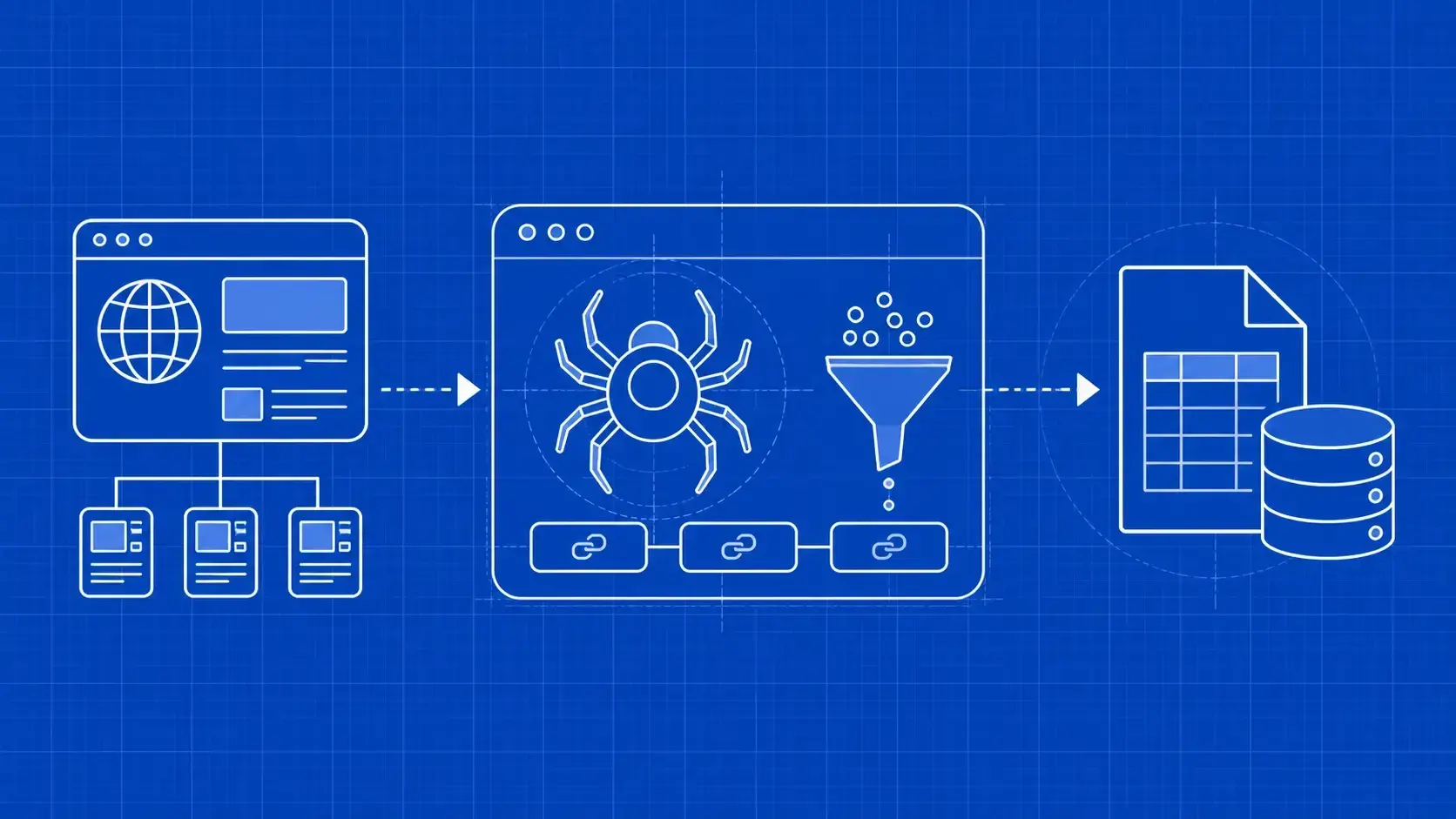
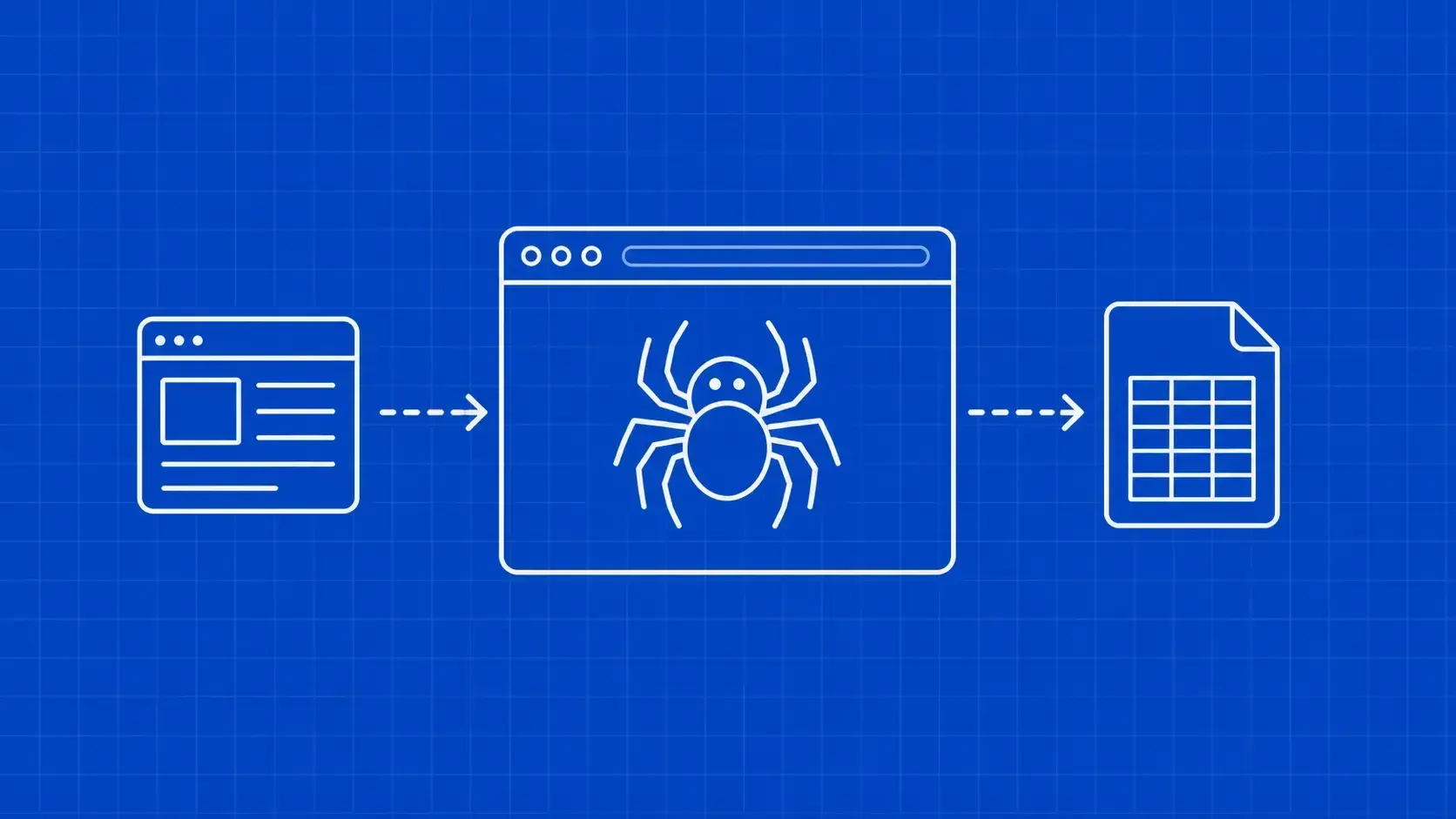
Scrapy is a Python crawling framework built around spiders, request and response middleware, and item pipelines. Comparing Scrapy alternatives means comparing several different system layers, not finding one interchangeable replacement.

A framework may take over crawl orchestration. A browser automation library may solve only rendered interaction. A hosted service may run the spiders you already have, while a managed API may shift request delivery and anti-bot work outside your infrastructure. Lightweight HTTP and parsing libraries can also be the right answer when the job is small enough that a crawler would be excess machinery.

Beyond Scrapy alone, the Python web scraping guide explains when Requests and Beautiful Soup, Playwright, or Scrapy fits a target.

This guide compares eight counted options across those categories. It starts with the decision to keep, extend, host, or replace Scrapy, then normalizes rendering, scheduling, proxy and CAPTCHA responsibility, retries, storage, language fit, control, operations, and cost. It also separates Crawlee from the cloud platform often associated with it, because framework and runtime are different buying decisions.

The goal is not to crown a permanent winner. It is to help you identify the actual bottleneck, preserve working code where possible, estimate total cost rather than license cost, and run a proof of concept that measures usable data instead of attractive feature lists.

First decide: replace Scrapy, extend it, or move it to managed hosting

Scrapy remains a strong fit for predictable, mostly server-rendered sites. Its spiders define traversal and extraction, middleware shapes request and response behavior, and pipelines process collected items. If that architecture already works, replacing it simply because another tool is newer usually adds risk without removing a real constraint.

Start with the bottleneck. Teams commonly revisit Scrapy when pages require browser execution, defenses make request delivery unreliable, or deployment and monitoring consume too much engineering time. Those are different problems, so they call for different Scrapy alternatives.

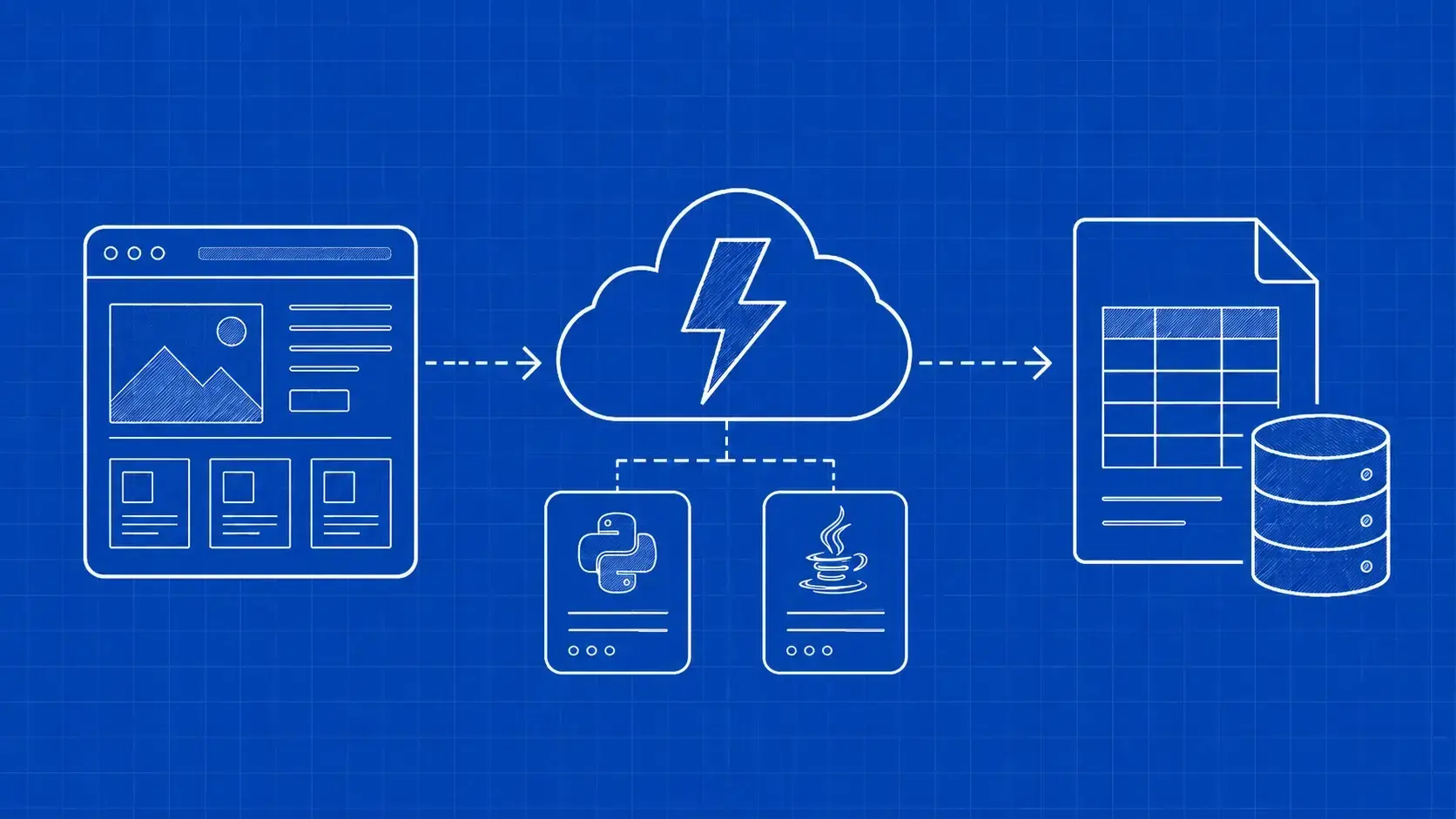
Replace Scrapy when the language, crawling model, or interaction model no longer fits. Extend it when only selected requests need a browser or a stronger request layer. Move it to managed hosting when the spiders are sound but scheduling, logs, and workers are the burden. Hybrid designs can preserve selectors, item pipelines, retry policy, and downstream schemas while changing only the failing layer. A practical Scrapy playbook should therefore begin with architecture diagnosis, not a rewrite plan.

How the eight options are evaluated

The comparison uses the same questions across unlike categories, while recognizing that a crawler framework, browser controller, hosted runtime, and managed API do not offer the same abstraction.

We evaluate crawl orchestration, JavaScript execution, anti-bot responsibility, language fit, control, deployment effort, scaling model, observability, and total operating cost. Capabilities are labeled native when the option supplies them, integration-based when your code or another service must supply them, and unavailable when the option is not designed for that job.

There is no universal best Scrapy alternative. A browser can complete an interactive checkout flow but cost far more per page than an HTTP crawler. A hosted platform can remove worker management without improving block rates. The useful question is which option removes your dominant constraint while preserving acceptable control, reliability, and economics.

Scrapy alternatives comparison matrix

Use this matrix as a shortlist, not a final ranking. N means native or provider-side, I means integration or client responsibility, U means unavailable, and V means the current capability must be verified before selection. An asterisk marks a date-sensitive claim.

Option

Category

JS

Schedule

Proxy/CAPTCHA

Retries

Storage

WebScrapingAPI

Managed API

V

I

N

V

I

Apify

Cloud platform

I

N*

I

I

N*

Scrapy Cloud

Hosted Scrapy

I

N*

I

I

N*

Crawlee

Crawler framework

N*

I

I

V

N*

Playwright

Browser automation

N*

I

I

I

I

Puppeteer

Browser automation

N*

I

I

I

I

Selenium

Browser automation

N

I

I

I

I

Requests + Beautiful Soup

Fetch and parse

U

I

I

I

I

The key distinction is responsibility. Some Scrapy alternatives replace crawling, some only render pages, and some move request delivery or operations behind a service boundary. Verify every starred or V-marked item against current first-party documentation before committing.

Managed APIs and hosted platforms

These options trade some low-level control for less infrastructure work. The important distinction is whether they replace request delivery, host your existing code, or provide a broader cloud workflow.

1. WebScrapingAPI: managed service to evaluate when infrastructure is the bottleneck

A managed scraping API shifts request delivery from your crawler hosts to a provider endpoint. For this option, the available product profile supports raw HTML retrieval, proxy rotation, block and CAPTCHA handling, plus billing tied to successful extraction. It does not establish browser rendering, session semantics, retry behavior, formats beyond raw HTML, rate limits, or current pricing, so treat those as evaluation questions rather than implied features.

Among Scrapy alternatives, this model can be an extension instead of a replacement. Keep spiders, selectors, item pipelines, and exports, then route only protected requests through the API. A smaller bounded collector can call the endpoint directly and parse the returned HTML with its existing stack. That makes integration effort measurable and preserves rollback.

The tradeoffs are per-request economics, network dependency, less control over low-level request behavior, and provider-specific diagnostics. Compare successful extraction cost rather than headline request price, and test response completeness as well as status codes. A guide on how to choose a scraping API is a useful companion when defining limits, error contracts, and support requirements.

2. Apify: cloud platform rather than a crawler library

Apify is best understood as a cloud execution and workflow platform, not as another name for Crawlee. Crawlee is code you build with; the platform runs packaged jobs, commonly called Actors, and is described in the supplied evidence as adding scheduling, storage, integrations, and deployment around code-based or ready-made workflows.

That distinction matters during migration. You can deploy a custom crawler, select an existing workflow, or use the platform as the operating layer for Crawlee. Only the first two may change extraction logic; moving execution alone mainly changes where jobs run.

The benefits are faster operational setup and a shared place for schedules, runs, and outputs. The costs can include platform conventions, workload-dependent pricing, and migration work if your job depends heavily on proprietary services. Confirm current storage behavior, integrations, deployment boundaries, and prices before modeling the decision.

3. Scrapy Cloud: hosting path for existing spiders

Scrapy Cloud is the lowest-change option when the crawler itself is healthy. The supplied evidence describes hosted deployment, scheduling, logs, job operations, and storage for Scrapy projects. Your spiders, selectors, pipelines, and Scrapy-specific behavior remain central, so this is managed Scrapy rather than a new crawling architecture.

That makes it attractive when worker provisioning, cron jobs, and log collection are the actual pain. It does not automatically make JavaScript pages render or protected targets accept requests. Those needs still require browser integration, proxy services, or another request layer.

Compared with full Scrapy alternatives, migration can be smaller because application code changes less. You still need to examine platform limits, data retention, storage, runtime controls, observability, and current pricing. Avoid relying on older plan figures, since commercial terms are date-sensitive.

Self-managed crawler and browser options

Self-managed tools maximize control and portability, but your team still owns deployment, capacity, monitoring, request quality, and incident response under load.

4. Crawlee: full crawler framework for Python and JavaScript teams

Crawlee is the closest option here to a framework-level replacement. Available evidence describes HTTP and browser-based crawlers, request queues, storage abstractions, and proxy configuration across JavaScript or Node.js and Python. Because current feature parity is not established, evaluate each language implementation separately rather than assuming identical APIs or release maturity.

For a JavaScript-first team, Crawlee can consolidate static fetching and browser automation under one crawling model. Python teams should compare its queue semantics, middleware equivalents, exporters, extension points, and operational tooling with the Scrapy features they already depend on. Either ecosystem can mix cheaper HTTP requests with browsers for selected routes, which is usually more efficient than rendering every page.

Self-hosting preserves control over networking, persistence, scheduling, and scaling, but also preserves the operational workload. Deploying the same project to a cloud platform changes that boundary without changing Crawlee into the platform itself. Confirm current licensing, adaptive-crawling behavior, retry defaults, proxy behavior, and Python versus JavaScript coverage. Treat any automatic unblocking claim as unverified unless current first-party documentation states exactly what is included.

For teams comparing Crawlee vs Scrapy, the deciding factors are usually language fit, browser integration, and rewrite cost, not a generic feature score.

5. Playwright: browser automation for JavaScript-heavy flows

Playwright controls real browser engines, so it fits pages where the required data appears only after scripts run, elements become ready, or a user-like sequence of clicks, scrolling, and form input completes. Browser contexts provide isolation within a process, while explicit locators and waiting controls help reduce brittle timing logic.

It is not a complete crawler. You still need URL discovery, queues, deduplication, persistence, retries, exports, proxy strategy, and CAPTCHA handling. Browser CPU and memory also make unbounded concurrency a poor default. At publication, confirm current engines, bindings, and parallelism guidance in the official Playwright documentation.

A selective hybrid is often safer than a rewrite. The scrapy-playwright project is described as connecting Playwright through a custom download handler configured under DOWNLOAD_HANDLERS, allowing only marked requests to use a browser while normal Scrapy requests keep the faster HTTP path. Check the current scrapy-playwright documentation before copying configuration. A focused Scrapy-Playwright tutorial can then cover context limits, page cleanup, and request metadata.

For readers comparing Scrapy vs Playwright, the tools solve different layers: crawling and pipelines on one side, rendered interaction on the other.

6. Puppeteer: browser automation for Node.js-centric projects

Puppeteer is a focused Scrapy alternative for JavaScript teams that need scripted browser interaction and are already centered on Node.js. It works well for targeted flows such as opening a rendered page, waiting for application state, clicking controls, and extracting the resulting DOM.

Like Playwright, it is a browser controller rather than a crawl scheduler or anti-bot service. Queues, persistence, proxy rotation, CAPTCHA services, and retry policy remain integrations. Concurrency must be bounded because pages and browser processes consume memory and CPU.

The practical Playwright comparison depends on required engines, APIs, team familiarity, and existing code. Firefox behavior and WebDriver BiDi support have changed over time, so verify current support rather than repeating an older browser matrix.

7. Selenium: browser automation when existing WebDriver infrastructure matters

Selenium is a sensible choice when a team already has WebDriver expertise, browser test utilities, worker pools, or Grid infrastructure. It can drive navigation, forms, cookies, clicks, and other real-browser behavior across language bindings, subject to the drivers and versions in use.

For scraping, the costs are synchronization bugs, browser resource consumption, worker orchestration, and debugging across browser and driver combinations. Selenium does not natively provide crawl queues, storage pipelines, proxy rotation, stealth, or CAPTCHA solving. Those remain separate responsibilities.

A detailed Scrapy vs Selenium comparison should therefore ask whether test-stack reuse offsets the additional crawl plumbing. Selenium Manager can reduce driver setup in current Selenium releases, but its exact behavior and supported environments are version-sensitive. Confirm bindings, Grid recommendations, licenses, and manager behavior in the official Selenium documentation.

Lightweight stacks for static or form-driven sites

These are compact building blocks for bounded jobs, not like-for-like web scraping frameworks.

8. Requests plus Beautiful Soup: simple fetching and parsing, not a crawler

Requests handles HTTP in Python; Beautiful Soup parses and navigates returned markup. Together they provide a fast setup for a small, static site where you already know the URLs or can follow a simple sequence of links. They are often the best Scrapy alternative only when Scrapy's crawler machinery would be unnecessary overhead.

The boundary is important. Beautiful Soup does not fetch pages, and Requests does not execute browser JavaScript or provide general HTML parsing. The pair also lacks built-in crawl scheduling, distributed coordination, item pipelines, persistence, and anti-bot infrastructure. You must add queues, concurrency, retries, rate limits, proxy handling, deduplication, and storage as the job grows.

This stack is easy to inspect and cheap to run for modest workloads, but hand-built orchestration can gradually recreate a framework. A Scrapy vs Beautiful Soup comparison should include future crawl breadth, not just the first script's line count.

MechanicalSoup, Axios, and Cheerio: narrower building blocks

MechanicalSoup combines Python fetching and parsing with cookies, sessions, and form submission, making it useful for multi-step sites that do not require JavaScript execution. It is a smaller step than adopting a browser, but it still lacks a full crawler's scheduling and distributed controls.

In Node.js, Axios can fetch pages asynchronously and Cheerio can query the returned markup with a jQuery-inspired API. Neither renders client-side JavaScript. Together they form a practical static fetch-and-parse stack, not a full Scrapy alternative. Choose these tools when the URL set and workflow are bounded, and add a crawler framework before custom queues and recovery logic become the project.

Compare total cost and operational risk

Feature tables hide the largest decision variable: who pays for failure and maintenance. Use a monthly model instead of comparing subscription prices alone:

TCO = provider fees + compute + browser capacity + proxy/CAPTCHA spend + failed-attempt cost + observability + engineering maintenance + incident response + amortized migration.

Cost component

What to measure

Compute

Worker hours, CPU, memory, storage, and network

Browser capacity

Concurrent pages, context reuse, startup time, memory peaks

Request delivery

Proxy traffic, CAPTCHA services, retries, blocked attempts

Reliability

Monitoring, alerts, logs, replay tooling, on-call time

Engineering

Upgrades, selector repair, queue work, dependency maintenance

Migration

Rewrite hours, parallel runs, validation, rollback support

For self-hosted Scrapy alternatives, translate engineering hours and incidents into the same period as infrastructure. For managed services, model billable units, unsuccessful requests, optional rendering multipliers, rate limits, and the cost of reduced control. If billing is based on successful extraction, define what “successful” means for your data, not only for the provider's HTTP response.

Browser-heavy designs need a separate capacity line because average request count can conceal peak memory and slow interactions. Migration also deserves explicit treatment: preserving spiders and pipelines may be worth more than a lower unit price.

A building-a-scraper versus data-extraction-tools analysis should use your volumes and failure modes. Without that, “cheaper” is only a guess, and the best-looking Scrapy alternatives matrix can still lead to the wrong architecture.

Plan a low-risk migration and proof of concept

Do not begin by porting every spider. Select representative targets: one stable static route, one rendered flow, one protected route, and one failure-prone edge case. Freeze expected fields and navigation outcomes so both implementations are judged against the same contract.

Test staged patterns:

  1. Keep Scrapy for ordinary requests and render only marked URLs with Playwright.
  2. Route protected requests through a managed API while preserving selectors and pipelines.
  3. Move unchanged spiders to hosted infrastructure when operations are the only bottleneck.
  4. Rebuild one isolated flow in Crawlee when language fit or browser orchestration justifies it.

Run old and new paths in parallel, record the same metrics, and retain a rollback switch. An HTTP 200 is not success if the rendered data is absent or the response is a challenge page.

Metric

Practical definition

Successful extraction

Valid records divided by attempts

Data completeness

Required fields present and semantically correct

Block and retry rates

Challenges, denials, timeouts, and repeat attempts

Latency

Median and tail time per valid result

Resource use

CPU, memory, browser concurrency, and network

Maintenance effort

Setup, fixes, monitoring, and operator time

Set pass thresholds before testing. Weight metrics by business impact, then compare total cost at the observed retry and success rates. This proof of concept turns Scrapy alternatives from a feature debate into an evidence-based migration decision.

Recommendations by team profile

  • Existing Scrapy team, predictable static targets: keep Scrapy and improve deployment or monitoring first.
  • Existing spiders with a few rendered routes: add Playwright selectively rather than rewriting the crawl.
  • JavaScript-first team needing a crawler: evaluate Crawlee, with language parity and operations verified.
  • Browser-heavy workflow: choose Playwright, Puppeteer, or Selenium according to engines, language, and infrastructure already owned.
  • Small static job: use Requests plus Beautiful Soup, or Axios plus Cheerio in Node.js.
  • Lean team facing protected targets: test a managed API; if only hosting hurts, test Scrapy Cloud.

The best Scrapy alternatives are conditional. Keep Scrapy whenever it still meets the target's rendering, reliability, control, and cost requirements.

Key Takeaways

  • Diagnose the bottleneck first: rendering, blocking, language fit, and operations require different remedies.
  • Preserve working spiders, selectors, and pipelines when a browser handler, managed request layer, or hosted runtime can solve the narrow problem.
  • Read every capability as native, integration-based, unavailable, or still requiring current first-party verification.
  • Compare Scrapy alternatives by cost per valid result, including retries, browser capacity, maintenance, incidents, and migration.
  • Require a representative proof of concept with completeness, block rate, latency, resources, and operator effort measured against preset thresholds.

FAQ

Can Playwright be added only to the Scrapy requests that need JavaScript?

Yes. Mark only selected Scrapy requests for browser handling while ordinary requests continue through the standard downloader. This limits browser CPU and memory, preserves queues and pipelines, and makes rollback straightforward. Treat context limits, page cleanup, timeouts, and error propagation as explicit acceptance criteria, then confirm the current integration syntax in the project documentation.

Do Playwright, Puppeteer, or Selenium include proxy rotation and CAPTCHA solving by default?

No. These tools automate browsers; they do not provide a managed proxy pool, automatic IP rotation, stealth guarantees, or CAPTCHA solving as a default service. You can configure a proxy or integrate external services, but ownership remains with your application. Test the full request path because a successfully launched browser does not imply a successfully extracted page.

Is Beautiful Soup a full Scrapy replacement or only an HTML parser?

Beautiful Soup is an HTML and XML parser, not a full crawler. Pairing it with an HTTP client gives you a compact scraper, but you still own URL discovery, scheduling, concurrency, deduplication, retries, persistence, and JavaScript rendering. It can replace Scrapy for a small known set of static pages, not for every crawl architecture.

Does Scrapy Cloud solve website blocking or mainly deployment and scheduling?

Scrapy Cloud mainly changes deployment and job operations. It can host existing spiders and centralize schedules, logs, runs, and stored outputs, subject to current platform terms. Blocking, browser rendering, proxy quality, and CAPTCHA handling remain separate concerns unless you add other components. Evaluate it when operations are painful but the spider design is still sound.

What should a proof of concept measure before a team replaces Scrapy?

Measure valid extracted results, required-field completeness, block rate, retry amplification, median and tail latency, CPU and memory use, and operator time. Define pass thresholds before the run and include representative static, rendered, protected, and failure-prone routes. A proof of concept should compare cost per usable result, not only request speed or HTTP success.

Conclusion

Choosing among Scrapy alternatives is an architecture decision before it is a tool decision. Keep Scrapy when server-rendered targets, predictable navigation, and in-house operations are working. Extend it when only a subset of requests needs browser execution or a different request layer. Move it to hosted infrastructure when deployment and job management are the problem. Replace it when language fit, browser-centric orchestration, or a simpler bounded stack materially reduces complexity.

The comparison also has to include responsibility. Browser automation gives you interaction control but not a complete crawler or automatic anti-bot system. Hosted platforms reduce operational work but may leave rendering and blocking unchanged. Managed APIs can remove infrastructure tasks, while self-hosted frameworks preserve more control and may fit high-volume economics better.

If protected HTTP requests are the bottleneck rather than crawl logic, consider testing WebScrapingAPI as a managed request layer. Its relevant fit is raw HTML retrieval with proxy rotation, CAPTCHA handling, and block handling, which can let you retain existing selectors and pipelines. Verify JavaScript rendering, sessions, retry semantics, formats, limits, and current pricing before production use.

Whichever path you shortlist, run it against representative targets, measure cost per valid record, and keep a rollback route. That evidence is more reliable than any permanent “best” label.

About the Author

Mihai Maxim, Full Stack Developer @ WebScrapingAPI

Mihai Maxim

Full Stack Developer

Mihai Maxim is a Full Stack Developer at WebScrapingAPI, contributing across the product and helping build reliable tools and features for the platform.

Start Building

Ready to Scale Your Data Collection?

Join 2,000+ companies using WebScrapingAPI to extract web data at enterprise scale with zero infrastructure overhead.