What is Screen Scraping?
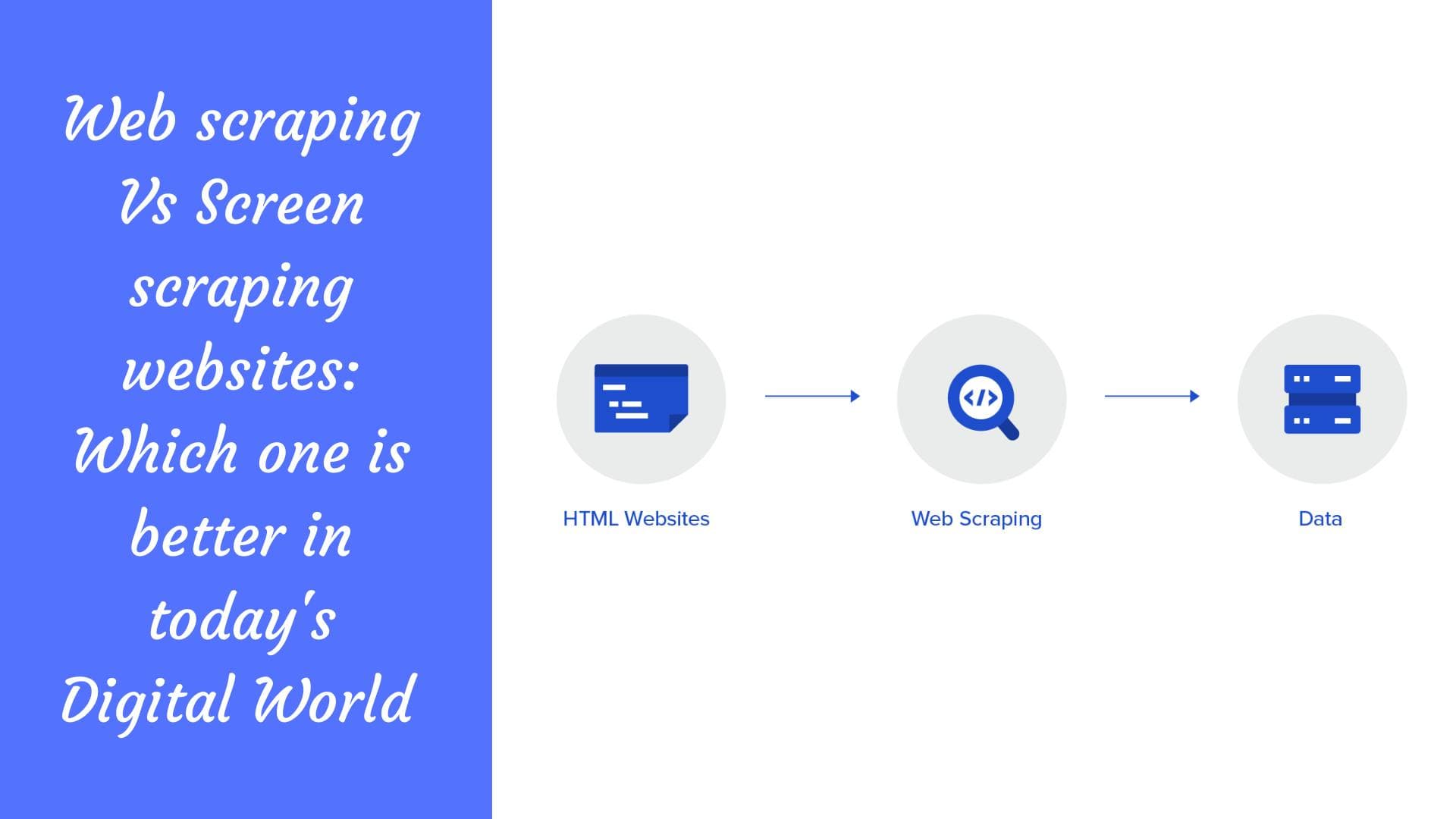
Screen scraping is a legitimate technique used in translating screen data/visual data from one application to another. This is sometimes confused with content scraping.
However, it is essential to note that there is a huge difference between screen scraping and content scraping. Content scraping is the process of manually or automatically harvesting content from any website without the approval of its owner.
Screen scraping is even called terminal emulation. Let's understand screen scraping with an example.
Under normal circumstances, a legacy/old application is either updated by writing the source code again or is replaced by a new program.
But, in a few other cases, the legacy application is continued due to a lack of programmers' unavailability of source code and documentation.
In the cases mentioned above, the only way of continuing with the legacy application may be required to write screen scraping software and let them translate it to a more updated version with an up-to-date user interface, UI.
Therefore, it can be said that screen scraping is used when all other options are out of the question.
However, a screen scraping application must do two things.
- It is able to capture screen input information and transfer it to the legacy application.
- Once processing is done, data must be returned from the application to the user and displayed appropriately on the user screen.
Screen scrapers are an essential part of integration scenarios and data migration. If there is no API-application program interface even after integrating legacy applications into modern apps, then screen scrapers are known to come to the rescue in various business scenarios.
It is much more convenient and less prone to errors to directly visit the transfer database from legacy to modern app through a user interface using a screen scraper.
Let's now look at the uses of screen-scraping websites