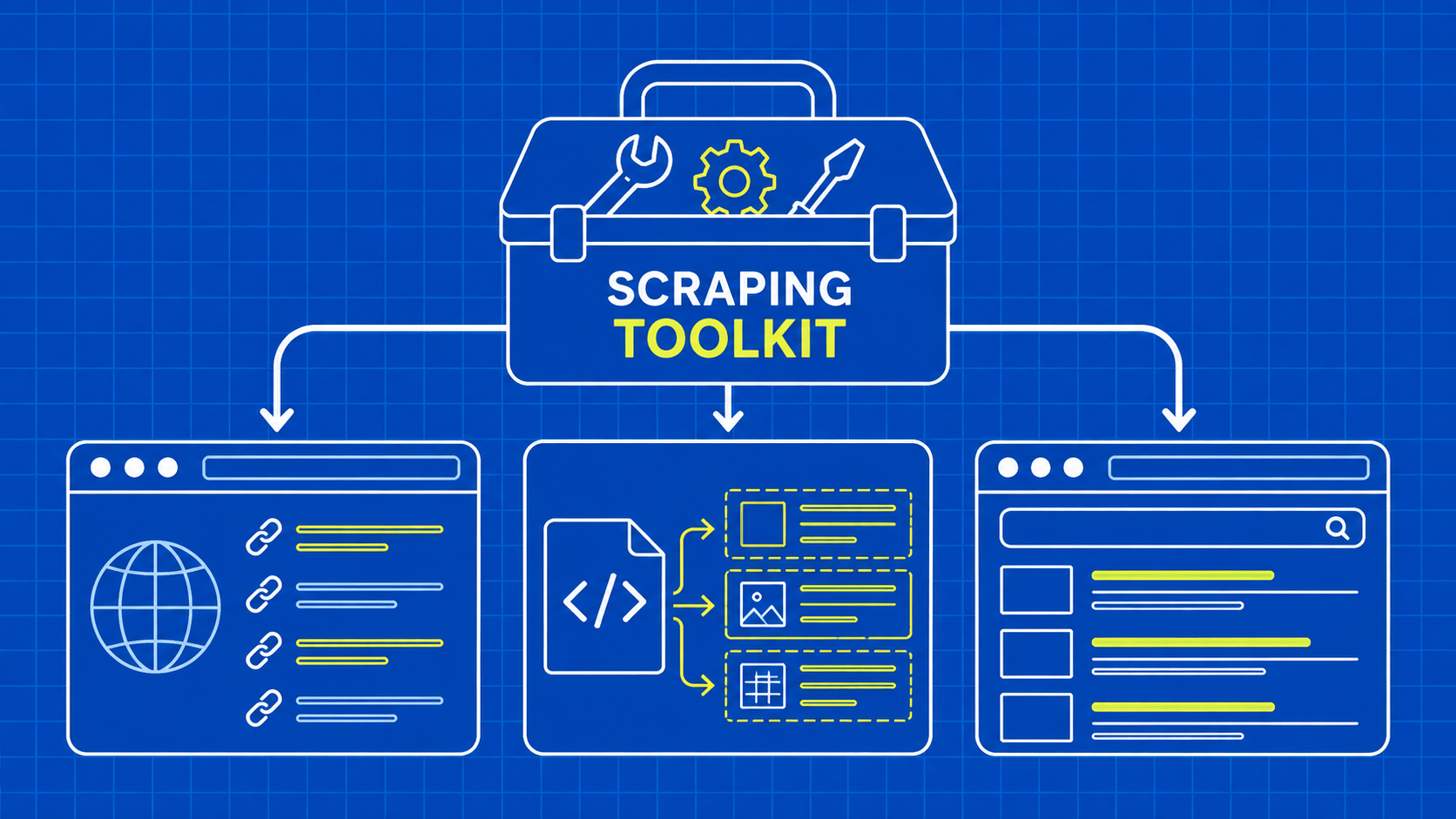
TL;DR: Choose Screaming Frog for site-audit extraction, Scrapy for a custom recurring crawler, Playwright for browser interactions, Web Scraper for visual extraction, and OpenRefine for cleaning collected data. These tools replace different parts of a workflow; evaluate the output you need instead of expecting one application to duplicate every feature.
A Scrapebox alternative is a replacement for the particular crawling, extraction, audit, or list-processing task you currently perform. The useful question is which capability needs replacing and who will operate it once the change is complete.
Imagine that your existing workflow begins with a URL list, extracts page titles and product attributes, removes duplicate entries, and exports a report. The collector, the cleanup rules, and the report are separate responsibilities even if one desktop application currently handles them. Moving all three at once can make a simple tool change unexpectedly difficult.
This guide compares five documented options for legitimate data collection and analysis. It does not rank them by unmeasured speed or invent a universal winner. A technical SEO audit and a browser-driven product workflow have different requirements, so their best starting points can differ.
You will map the current task, shortlist an appropriate replacement, and validate the resulting records before retiring the old process. The focus is useful data with repeatable handling, not expanding collection volume for its own sake.