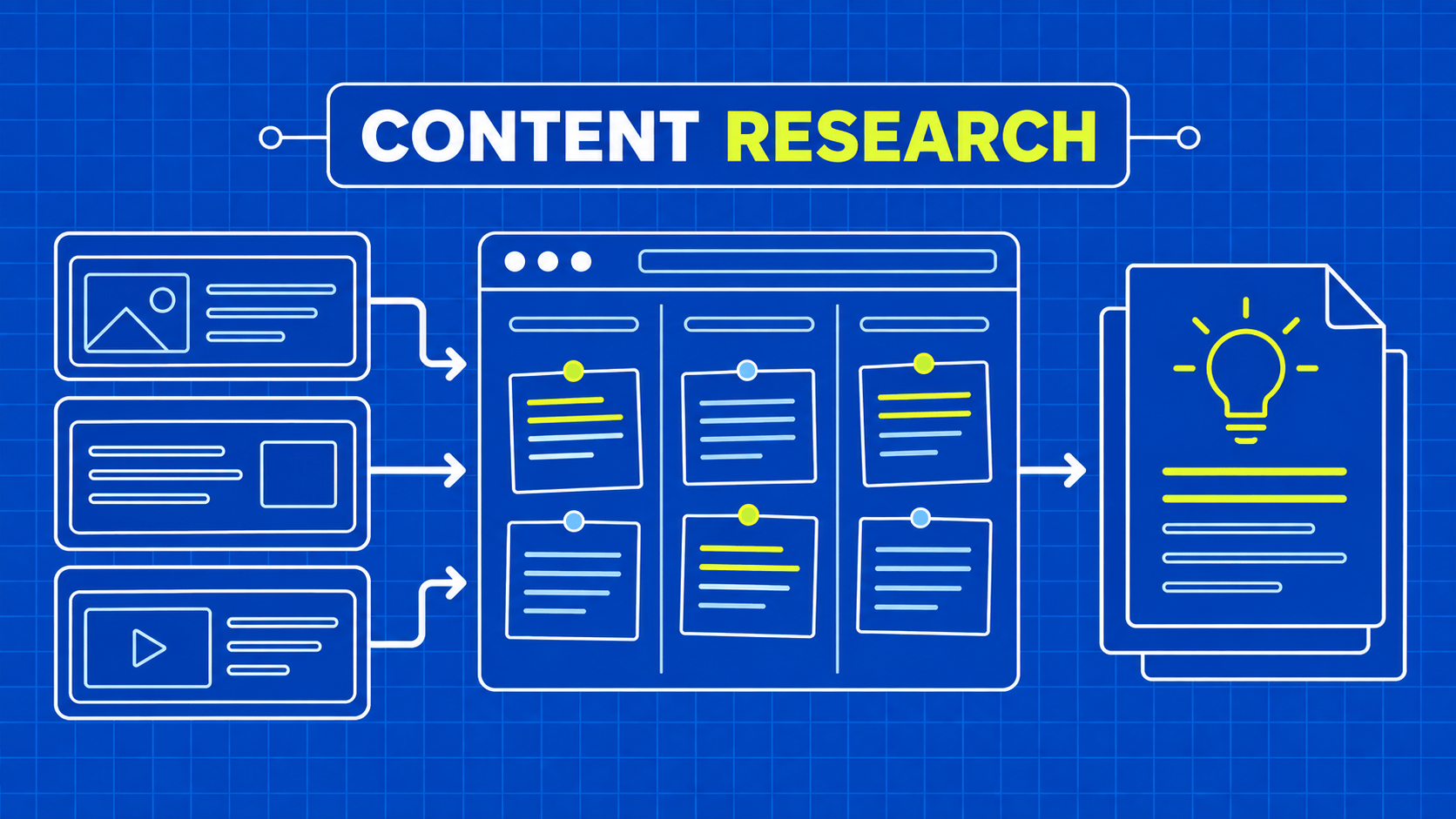
TL;DR: Web scraping for content marketing should supply evidence, not copied articles. Build a bounded source inventory, preserve what was observed and when, then use that evidence to answer a reader question with original analysis, transparent limitations, and appropriate citations.
Your developer audience keeps asking how to compare data-export options. An editor wants a practical guide, but the draft outline is currently a collection of competitor headings. Collecting more headings will not solve the underlying problem: the team needs evidence about the decisions readers actually face.
Web scraping for content marketing is the controlled extraction of web information to support research, planning, and evidence-based editorial work. Its useful output might be a product-documentation inventory, a set of changes worth explaining, or a reproducible dataset for an original analysis. It should not be a machine for republishing other people's work.
This guide follows a hypothetical developer-content project: comparing how a defined set of public documentation pages explains data export. The project is illustrative; no market-wide study or measured result is claimed. The workflow applies equally well to a technical newsletter, a research-backed guide, or an internal editorial planning system.
The goal is to help a reader make a better decision. Traffic, search visibility, and citations may be outcomes worth measuring, but neither collecting data nor formatting a table guarantees them. Start with the reader's question and make every collection step accountable to it.